
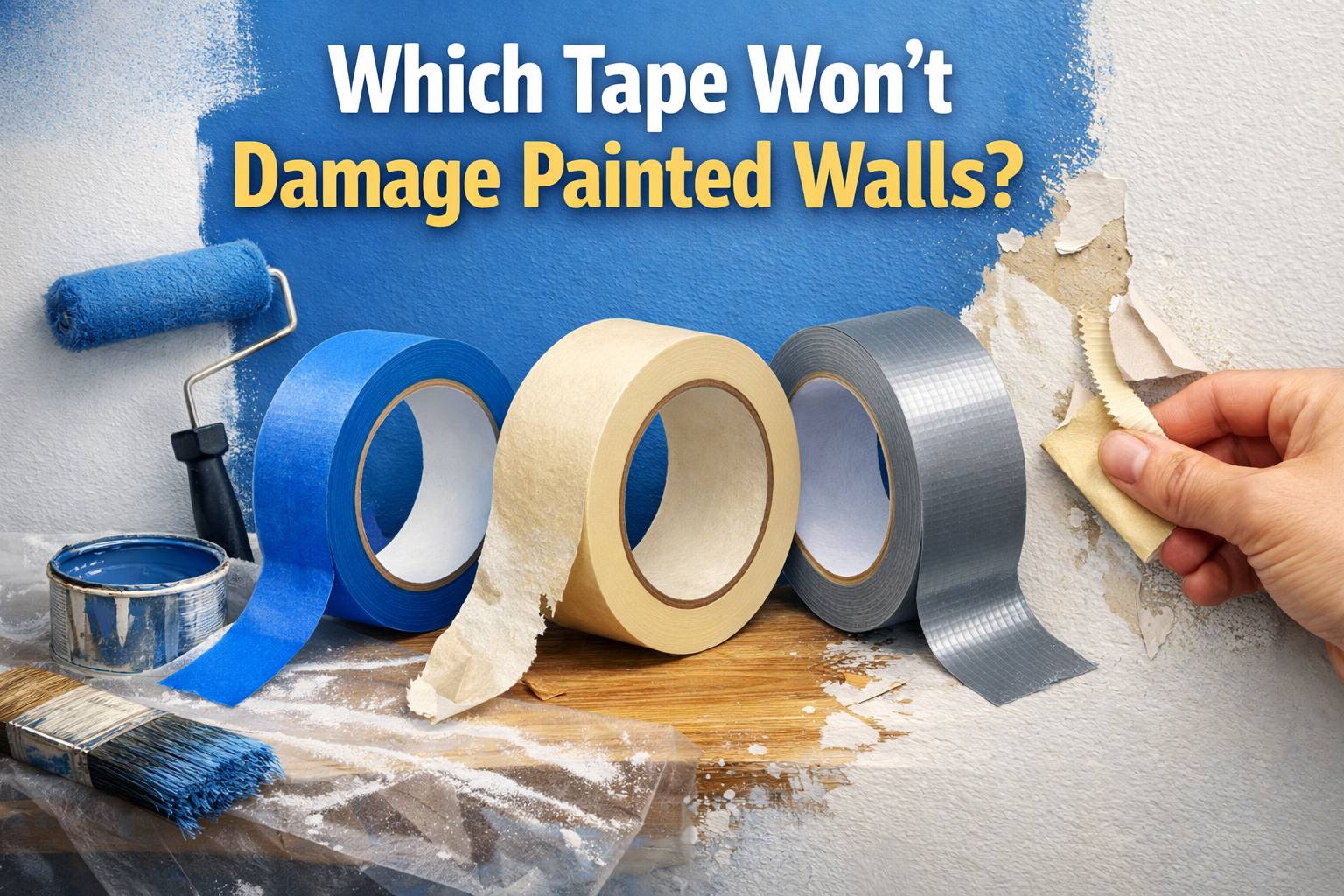
Which Tape Won’t Damage Painted Walls?
Whether you’re hanging decorations, protecting woodwork during a paint job, or just trying to keep a dust sheet in place — choosing the wrong tape on a painted wall can mean peeling paint, sticky residue, or a costly redecoration. Here’s how to get it right, and which products to reach for.
Painted walls are one of the most common surfaces people reach for tape on — and one of the most unforgiving when you get it wrong. Pull off the wrong tape after a weekend of decorating and you can lift the paint clean off the wall, especially on freshly painted surfaces or older emulsion that’s already starting to lose its bond with the plaster beneath.
The good news is that the right tape will hold firmly while you need it to, then peel away cleanly without leaving a mark. The issue is that not all masking tape is created equal — and “any roll from the hardware shop” doesn’t always cut it.
Why Does Tape Damage Painted Walls?
Before looking at which tapes to choose, it helps to understand why some cause damage in the first place.
Most tape damage to painted walls comes down to one of three things:
Adhesive strength. Standard masking tape and duct tape are designed to bond firmly to robust surfaces. On painted walls — particularly emulsion — the adhesive can bond more strongly to the paint than the paint bonds to the plaster underneath. When you pull the tape away, the paint comes with it.
How long the tape is left on. Even a tape that’s safe for short-term use can cause damage if left for several days. The adhesive cures over time and becomes increasingly difficult to remove cleanly.
Surface condition. A freshly painted wall (less than a week old), one with multiple old layers of paint, or a flat/matte finish is far more vulnerable than a fully cured satin or silk surface.
The Best Tapes for Painted Walls
14-Day Blue Painter’s Tape
Our 14-day blue painter’s tape is the go-to choice for professional decorators — and for good reason. It’s a low-tack, acrylic-based masking tape that guarantees a clean, residue-free peel for up to 14 days, making it ideal for most standard decorating scenarios.
The blue colour makes it highly visible on walls, so you’re never squinting to see where your masking line is. It’s also UV and moisture resistant, which means it holds up well in varied conditions — useful if you’re working across multiple rooms or leaving a job overnight.
This is the right tape for:
- Masking skirting boards, door frames, and coving during painting
- Protecting window frames from paint splatter
- Fixing dust sheets and polythene to walls and skirting boards
- Temporary labelling and marking during renovation work
Available in a range of widths — 12mm, 19mm, 25mm, and 50mm — so you can choose the right size for the job.
FrogTape — For Sharper Lines and Delicate Surfaces
If you’re looking for the sharpest possible paint line, or you’re working on a surface that needs extra care, FrogTape is a step up from standard decorator’s tape.
PSA Solutions is an official UK FrogTape supplier, and it’s one of the most trusted painter’s tapes on the market. What sets FrogTape apart is its PaintBlock® Technology — a super-absorbent polymer built into the tape that reacts with latex paint and instantly gels to form a micro-barrier along the tape’s edge. This prevents paint bleed, giving you cleaner, sharper lines with no touch-ups required.
There are two versions to be aware of depending on your surface:
FrogTape Multi-Surface (green) — A medium-adhesion tape designed for cured painted walls, wood trim, glass, metal, unfinished wood, carpet, and stone. Removes cleanly for up to 21 days, and even up to 7 days in direct sunlight.
FrogTape Delicate Surface (yellow) — A low-adhesion tape specifically designed for freshly painted surfaces (as little as 24 hours old), primed plasterboard, wallpaper, finished wood, and veneer or laminate. This is the one to reach for if you’re working on a newly decorated room, or any surface where you’re not confident the paint is fully cured.
Decorator’s and Painter’s Masking Tape
Our broader range of decorator’s masking tapes covers everything from general-purpose painter’s tape through to more specialist products, including fine line tapes for precision work. If you’re a professional decorator or tradesperson handling a variety of surfaces and finishes, browsing the full category is worth doing — there’s a tape suited to each specific application.
For precision work — such as creating a two-tone wall effect, painting stripes, or cutting in around intricate trim — fine line masking tape delivers exceptionally smooth, clean edges that wider tapes can’t always achieve.
What About Double-Sided Tape on Painted Walls?
Double-sided tape on painted walls requires careful product selection. Most standard double-sided tapes use aggressive adhesives designed for permanent bonding — these will almost certainly damage paint on removal.
If you need to mount something to a wall temporarily without drilling, look specifically for removable or peelable options. PSA Solutions’ removable double-sided cloth tape is designed for temporary fixation and can be peeled away cleanly — it’s far safer on delicate surfaces than a standard double-sided product. For anything more permanent, a mechanical fixing is nearly always preferable on a painted wall.
Tapes to Avoid on Painted Walls
To save you the headache, here are the tapes most likely to cause damage:
Duct tape — extremely high tack, built for heavy-duty bonding. It will almost certainly damage paintwork on removal and will leave significant residue.
Standard parcel/packing tape — the solvent-based adhesive bonds aggressively and is particularly prone to lifting paint and leaving sticky marks.
Standard brown masking tape — the everyday beige/brown roll you’ll find in most hardware shops is significantly higher tack than proper decorator’s tape. It’s not formulated for painted surfaces and carries a real risk of pulling the finish away.
Gaffer tape — an excellent tape for many applications (floors, cables, staging), but far too aggressive for painted interior walls.
Tips for Using Tape Safely on Painted Walls
Even with the right tape, a little care goes a long way:
Test a small area first. Before running a full length across the wall, apply a short piece to an inconspicuous spot, press it firmly, and pull it away after an hour. If the paint lifts, the surface needs more curing time or a lighter-tack product.
Don’t leave tape on longer than necessary. The longer tape sits, the more the adhesive bonds. If you’re masking for a paint job, remove the tape as soon as the work is complete — ideally while the paint is still very slightly tacky rather than fully dried.
Remove at a low angle. Peel slowly at roughly 45 degrees back on itself. Pulling upward or outward dramatically increases the risk of lifting paint.
Warm the tape slightly if it’s been on a while. A hairdryer on a low heat setting can help soften adhesive on tape that’s been in place for a day or more, making removal much cleaner.
Allow newly painted walls to cure before taping. As a general rule, allow at least 7 days for emulsion to fully harden before applying any tape. Even low-tack tape can damage paint that hasn’t fully cured. If you need to tape sooner, FrogTape Delicate Surface is rated for surfaces painted as recently as 24 hours prior.
Quick Reference: Which Tape for Which Job?
| Situation | Recommended Tape |
|---|---|
| Masking skirting boards and door frames during painting | 14-Day Blue Painter’s Tape |
| Sharp paint lines on cured walls and trim | FrogTape Multi-Surface |
| Working on freshly painted or delicate surfaces | FrogTape Delicate Surface |
| Precision lines, stripes, or two-tone effects | Fine Line Masking Tape |
| Fixing dust sheets to walls | 14-Day Blue Painter’s Tape |
| Temporary mounting without drilling | Removable Double-Sided Tape |
Not Sure Which Tape Is Right for You?
With over 40 years’ experience in adhesive tapes and solutions, PSA Solutions’ team is on hand to help you choose the right product for your specific surface and application. Get in touch on 0116 286 5141 or email [email protected] and we’ll point you in the right direction.
You can also browse our full range of decorator’s and painter’s tapes online, with bulk buying options available across the range — the more you buy, the more you save.
Related reading: How To Remove Adhesive Residue Without Damaging Surfaces


Add comment