
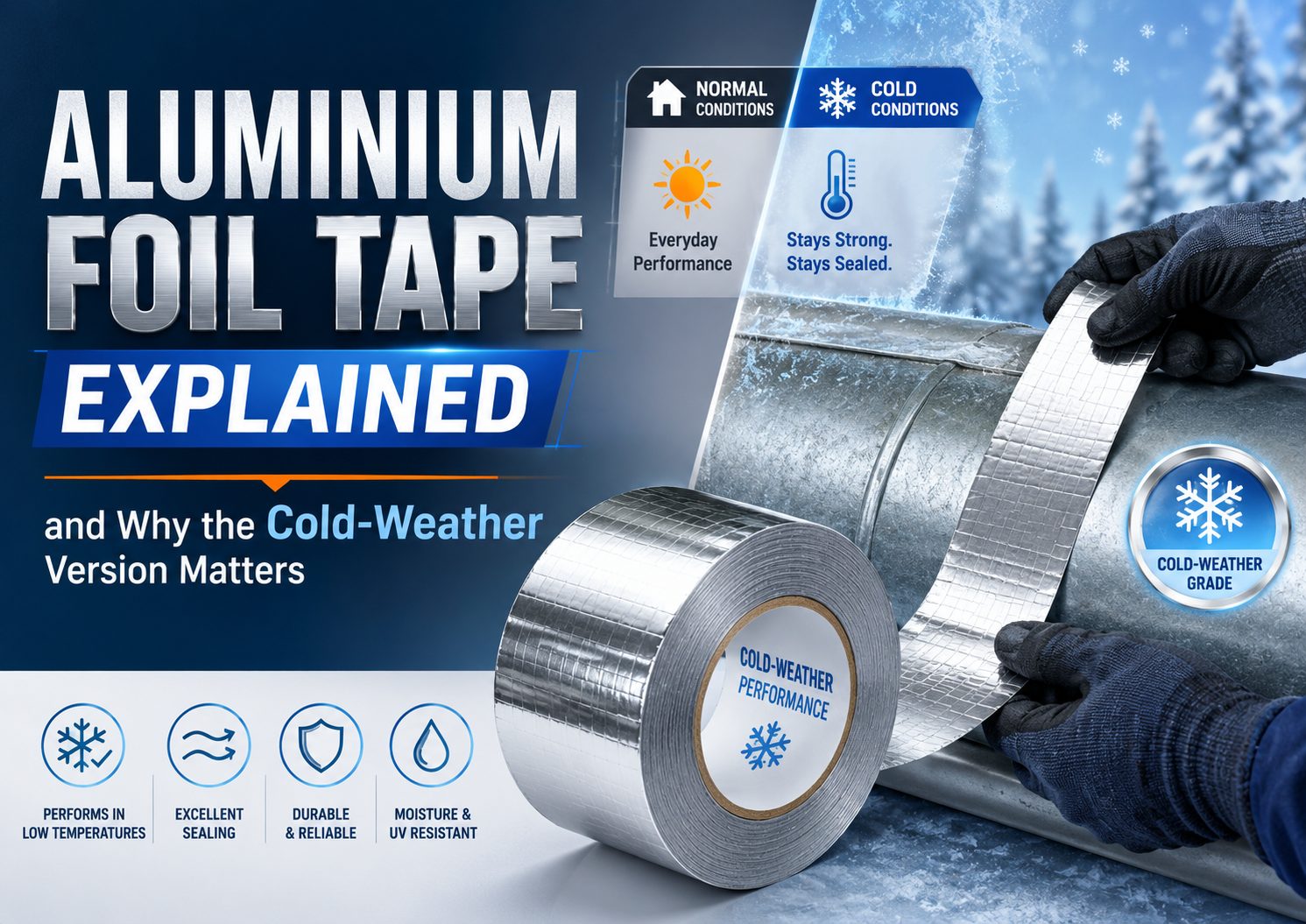
Aluminium Foil Tape Explained (and Why the Cold-Weather Version Matters)
Aluminium foil tape is one of those products people grab without much thought — until it peels off a cold duct in an unheated loft in January, and they realise not all foil tape is the same. It’s the correct tool for a whole range of heating, ventilation and insulation jobs where ordinary tape simply won’t do, but choosing the right type matters enormously, especially in the British climate.
This guide explains what aluminium foil tape actually is, what it’s for, the common jobs where cloth “duct tape” will let you down, and why the cold-weather version exists — the difference that saves the most failed repairs of all.
What is aluminium foil tape?
Aluminium foil tape is exactly what the name suggests: a thin aluminium foil backing coated with a pressure-sensitive adhesive. A common gauge is 30 micron (about 1.2 mils), which is robust enough to resist tearing yet thin and soft enough to conform neatly around pipes, duct seams and irregular shapes.
What makes it so useful is the combination of properties the foil brings:
- Heat reflectance and thermal conductivity — it reflects radiant heat and conducts warmth, which is why it’s used for heat shielding and on heating and cooling systems.
- A vapour and moisture barrier — the foil and adhesive together seal out air and water vapour, maintaining the vapour barrier on insulation.
- Heat and flame resistance — it withstands high service temperatures that would soften ordinary tapes.
- An airtight, durable seal — ideal for sealing joints that need to stay closed for years.
What aluminium foil tape is used for
Foil tape earns its place across heating, ventilation, insulation and repair work. The main jobs are:
- Sealing and joining HVAC ductwork — the classic use, closing seams and joints on sheet-metal and fibreglass ducts so conditioned air doesn’t leak.
- Sealing foil-faced insulation and duct board — matching foil-to-foil to keep the vapour barrier and reflectivity intact.
- Pipe insulation and lagging — sealing the seams on insulated pipework.
- Heat reflection and shielding — protecting heat-sensitive components and reflecting radiant heat.
- Cold stores, freezers and coolers — sealing in low-temperature environments.
- Outdoor fixings and emergency repairs — patching glazing bars, roof-lights and metalwork.
Browse the full aluminium foil tape range to see the widths and grades available.
The “duct tape” myth
Here’s the thing that surprises people: despite the name, cloth duct tape is the wrong product for actual ducts. Cloth duct tape’s rubber adhesive and fabric backing dry out, harden and let go as ducts heat and cool, and it doesn’t hold the vapour barrier. For sealing HVAC ductwork and foil-faced insulation, the correct products are foil tape or duct mastic — foil tape matches the surface, maintains the vapour and heat barrier, and withstands the temperatures involved. If you’re sealing a duct, reach for foil tape, not the silver cloth roll.
The types of foil tape — and which to choose
Not all foil tape is interchangeable. PSA stocks a few distinct grades:
- General purpose 30 micron foil tape — the everyday all-rounder for sealing and patching ducts, pipes, foil insulation and metal surfaces in normal, warm-ish indoor conditions. It gives a strong, conformable bond and is easy to apply. A couple of caveats worth knowing: it’s best protected from prolonged direct sunlight and weathering, and it’s not a substitute for proper electrical tape. The 38mm and 60mm rolls cover most jobs.
- Cold-weather 30 micron foil tape — the one engineered to bond when conditions are against you (more on this below).
- Reinforced foil tape — foil with an added scrim reinforcement for extra tensile strength and tear resistance, for joints that see more stress.
- 6-ply puncture-resistant foil tape — a heavy-duty, multi-layer foil for demanding or abrasive environments. See the puncture-resistant range.
Why the cold-weather version matters
This is the distinction that catches most people out. Standard adhesives need a degree of warmth and a dry surface to tack and bond properly. The problem is that in the UK, a huge amount of ductwork and insulation lives in exactly the wrong places for that: unheated lofts, garages, plant rooms and outbuildings, external and rooftop ducting, cold stores, walk-in freezers and chillers — and a great deal of installation and repair work happens in the depths of winter.
Apply an ordinary foil tape to a cold or slightly damp surface and it simply won’t grip. It looks fine for a day, then the edges lift the moment the joint is under any stress or the duct starts cycling between hot and cold. That’s a callback waiting to happen.
PSA’s cold-weather aluminium foil tape is built for these conditions. It carries a patented cold-weather adhesive system that’s engineered to bond at low temperatures and in high humidity — it’s field-tested for application in sub-zero conditions and remains stable at high service temperatures. Because the adhesive is solvent-based, it provides immediate waterproofing on application, so a shower of rain shortly afterwards isn’t a problem, and it isn’t damaged by freezing temperatures. It also grips porous surfaces better than a standard foil tape.
The clever part is what happens after you’ve stuck it down: the adhesive continues to self-cross-link, meaning the bond strength actually increases over time, giving reliable, permanent splices rather than a seal that weakens. In short, it’s the foil tape that still works when it’s cold, damp and awkward — which, for a lot of British ductwork, is most of the time. It comes in 48mm, 72mm and 96mm widths.
When you specifically need cold-weather foil tape
- Any install or repair done in winter or cold weather
- Unheated, exterior or rooftop ductwork you can’t warm up
- Cold stores, freezers and chillers
- Damp or high-humidity environments, and condensation-prone surfaces
- Any job where you can’t heat the area first and need the bond to take immediately
How to get the best from foil tape
Whichever grade you use, a few basics make all the difference:
- Clean and degrease. Wipe the surface with an IPA cleaning wipe to remove dust, oil and grease — foil tape needs a clean surface to seal.
- Get it as dry as you can. Cold-weather tape tolerates damp far better than standard tape, but drier is always better.
- Apply firm, even pressure and burnish the edges. Foil tape is pressure-activated — run a squeegee or the edge of a rigid applicator along it to press out air and lock the edges down. The cold-weather adhesive then keeps building strength as it cross-links.
- Overlap your joints by a good margin, and choose a tape width that comfortably covers the seam with foil either side.
Which PSA foil tape should you choose?
- Everyday duct, pipe and insulation sealing indoors: general purpose 30 micron foil tape
- Cold, damp, exterior, freezer or winter jobs: cold-weather 30 micron foil tape
- Joints under stress or needing extra tear resistance: reinforced foil tape
- Demanding or abrasive environments: 6-ply puncture-resistant foil tape
Frequently asked questions
What is aluminium foil tape used for? Sealing and joining HVAC ductwork, sealing foil-faced insulation and duct board, lagging pipes, heat reflection and shielding, and low-temperature and outdoor repairs. Its foil backing gives a heat-resistant, reflective vapour barrier that ordinary tapes can’t match.
Can you use foil tape instead of duct tape on ductwork? You should. Cloth duct tape dries out and fails on ducts, whereas foil tape is the correct product — it matches the surface, maintains the vapour barrier and withstands the heat. Use foil tape (or duct mastic), not cloth duct tape, for sealing ducts.
What’s the difference between cold-weather and general-purpose foil tape? General-purpose foil tape needs warm-ish, dry conditions to bond well. Cold-weather foil tape uses a specialised adhesive that bonds at low temperatures and in high humidity, waterproofs immediately, and keeps getting stronger as it cures — so it works where standard tape can’t.
Can you apply foil tape in cold or damp conditions? Only reliably with the cold-weather grade. A standard foil tape applied to a cold or damp surface will lift at the edges; the cold-weather version is designed specifically to tack and bond in those conditions.
Does foil tape work as a vapour barrier? Yes — the foil backing and sealing adhesive block air and moisture vapour, which is why it’s the go-to for sealing foil-faced insulation and maintaining the vapour barrier on ductwork.
Is foil tape heat resistant? Yes. It withstands high service temperatures that would soften ordinary tapes, reflects radiant heat, and is used for heat shielding around heat-sensitive components as well as on heating systems.
PSA Solutions are aluminium foil tape suppliers based in Leicestershire, stocking foil tapes from leading manufacturers, in stock and usually dispatched within 2–3 working days. Not sure which grade suits your job? Contact the team for free advice, and visit the Adhesive Advice Centre for more practical guides.



Add comment