
Get Your Caravan Ready for Winter Storage
The touring season is winding down, and your caravan is about to sit still for months. How you put it away now decides what state you’ll find it in come spring — and the difference between a five-minute recommissioning and an expensive repair almost always comes down to the prep you did in autumn.
Two enemies do the damage over a British winter: frost, which bursts water systems, and damp, which quietly rots timber and delaminates walls while nobody’s looking. This guide is a complete checklist for laying your caravan up properly, with particular attention to sealing out the damp that causes the most costly, hidden problems.
Start with a thorough clean, inside and out
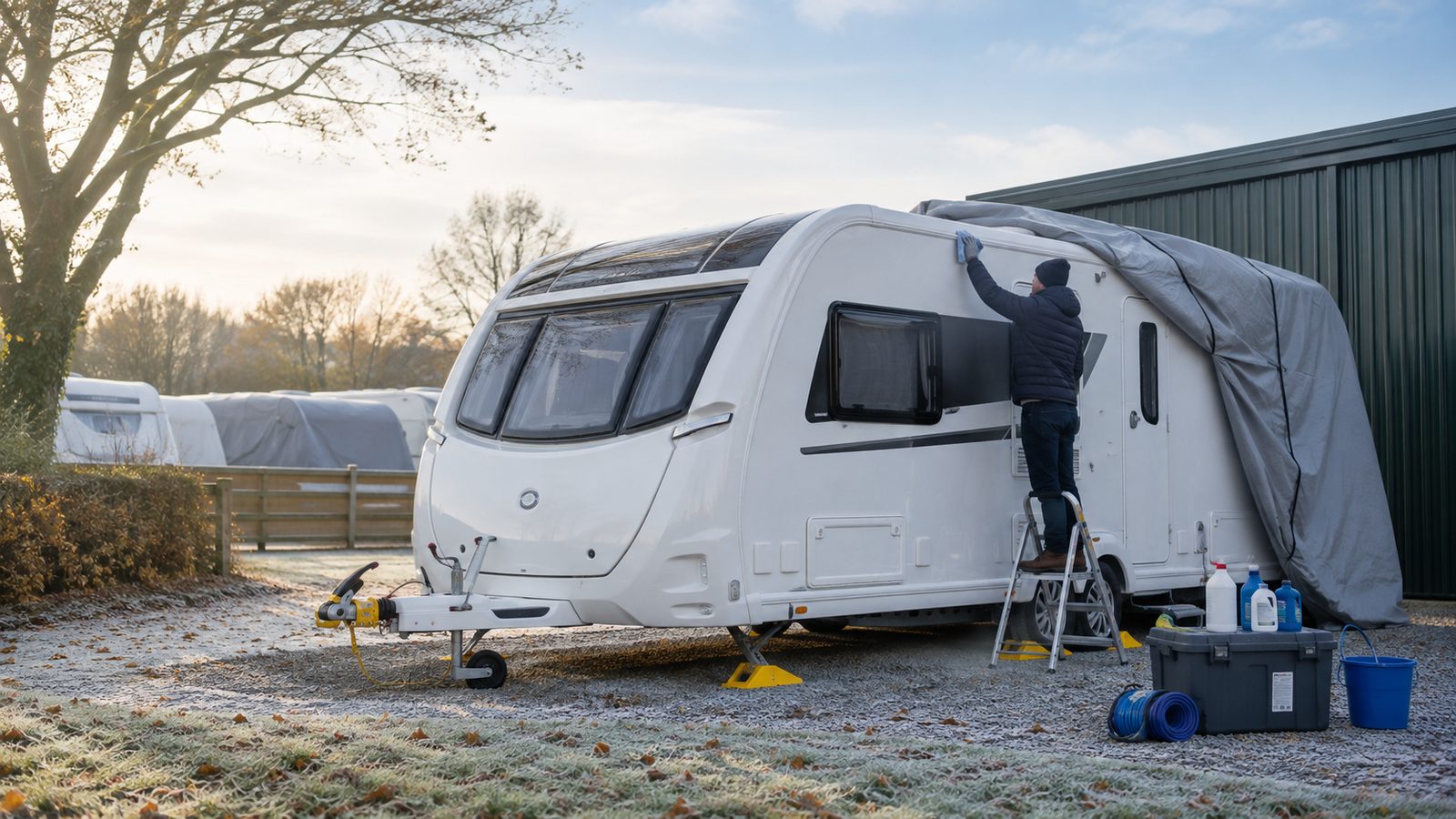
It’s tempting to skip this, but a clean caravan stores far better than a dirty one. Trapped dirt, tree sap, algae and bird mess hold moisture against the bodywork all winter and can stain or damage the surface. Wash and dry the exterior, clean the roof (safely, from a ladder — most caravan roofs aren’t walk-on), and clear the gutters and window channels so water drains away rather than pooling.
Inside, empty every cupboard, clear out all food, defrost and clean the fridge, and give the whole interior a wipe-down and vacuum. Anything left in cupboards — food, toiletries, damp fabric — is an invitation to mould and mice.
Drain the water system completely
This is the frost job, and it’s not optional. Water left in the system will freeze, expand and split pipes, taps, the water heater and pump — one of the most common and avoidable winter repairs.
- Drain the fresh and waste water tanks fully.
- Open all the taps and leave them open (mid-position for mixer taps) so any residual water can escape and expand safely.
- Drain the water heater via its drain valve.
- Empty, clean and dry your Aquaroll and Wastemaster and store them inside.
- Drain and treat the toilet flush tank and cassette, and leave the blade open.
Run the pump only briefly to clear it, then switch it off. The aim is a system with nowhere for trapped water to freeze.
Deal with damp — the biggest hidden threat
Frost does its damage in one dramatic moment; damp does it slowly and expensively over the whole winter. This is where a bit of effort pays for itself many times over.
Fix leaks before you store it, not after
A small leak at a seam, rooflight or the awning rail that drips all winter will leave you with soaked, blackened timber and delamination by spring — a repair running into hundreds or thousands of pounds. So before the caravan goes away, walk the roof seams, rooflights, vents, window surrounds and the wall-to-roof joint above the awning rail, and check for any cracked, lifting or perished sealant. Run a damp meter over the interior walls and around fittings if you have one.
Reseal any failing joints now with butyl flashing tape, which stays flexible through the coldest weather and forms a permanent watertight seal over seams, panel joints and rooflight surrounds. Autumn is genuinely the right moment for this: butyl needs a dry surface and ideally a temperature around 10°C or above to bond, so sealing now — before the cold and damp arrive — gives a far better result than an emergency patch in December. (Our companion guide on sealing a leaking caravan roof, in the Adhesive Advice Centre, walks through the full method.) For the porous or awkward joints, a surface primer and a wipe-down with IPA cleaning wipes beforehand makes all the difference to how well the seal holds.
Refresh the door and window seals
Perished rubber seals let draughts and moisture in and let warmth out. Check the door and window seals for cracking and gaps, and renew any that have gone with a single-sided EPDM weatherseal foam tape, which seals against weather, dust and draughts and copes with the cold. The wider single-sided foam range covers larger gaps.
Let it breathe
Counter-intuitively, you should not seal a stored caravan up airtight — that traps moisture and guarantees condensation and mould. Instead, encourage airflow:
- Leave roof vents slightly open (they’re designed to keep the rain out while ventilating).
- Prop interior cupboard and wardrobe doors open, and leave the fridge door ajar with the catch on its storage setting.
- Stand seat cushions on their edges, or lift them, so air can circulate underneath — better still, take them home to a dry room.
- Place moisture traps or dehumidifier crystals inside, and replace them through the winter.
Cover it wisely
If you use a cover, use a breathable caravan cover, never a plastic tarpaulin — a non-breathable sheet traps condensation underneath and does more harm than good. Pad any sharp edges, aerials and corners first so the cover can’t chafe the bodywork in the wind.
Look after the battery
A leisure battery left connected and slowly discharging over winter can be ruined by spring, and a flat battery can freeze. Ideally, remove it, top up the charge, and store it somewhere cool, dry and frost-free, giving it a top-up charge every few weeks (or leave it on a suitable smart/trickle charger). If you leave it in situ, disconnect it and keep it maintained. Don’t let it sit flat and cold for months.
Tyres, chassis and steadies
- Tyres: inflate to the correct pressure (some owners add a little extra to reduce flat-spotting). If the caravan will sit in one spot for months, move it occasionally, or use winter wheels or axle stands to take the weight off the tyres.
- Corner steadies: wind them down onto load-spreading pads so the caravan is stable, but let the suspension and tyres still carry the main weight unless you’re using axle stands.
- Exposed metal: wipe a little grease or corrosion protectant onto the hitch, jockey wheel, corner-steady threads and other bare metal to keep rust at bay.
Gas and appliances
Turn the gas off at the cylinder. Where you can, remove the cylinders and store them upright, outdoors, in a secure, well-ventilated place away from the house — never in a cupboard indoors or below ground level. Leave the fridge off, cleaned and propped open. If you’re ever unsure about gas work or appliances, a habitation service by a qualified engineer is the safe route.
Don’t forget security
Caravan theft climbs over winter, and your insurer will expect reasonable precautions. Fit a hitch lock and a wheel clamp, use an alarm or tracker if you have one, and remove valuables, electronics and anything worth stealing. Storing at a CaSSOA-rated site often reduces your premium — and check your policy’s storage and security requirements so a claim isn’t invalidated. Note down your VIN and CRiS number while you’re at it.
Final walk-round
Before you lock up and leave it, a quick recap:
- Cleaned inside and out, cupboards empty, fridge defrosted and propped open
- Water system fully drained, taps open, tanks emptied and stored
- Leaks sealed, seals refreshed, vents cracked open, moisture traps in
- Breathable cover on, edges padded
- Battery removed or disconnected and maintained
- Tyres set, steadies down, bare metal protected
- Gas off, cylinders stored safely
- Security devices fitted, valuables removed, documents noted
Frequently asked questions
How do I stop my caravan getting damp in storage? Do three things: fix any leaks before you store it, keep air moving inside (vents cracked, cupboard and fridge doors ajar, cushions lifted), and use moisture traps. Cover with a breathable cover, never plastic. Damp is caused by trapped moisture and hidden leaks, so ventilation plus sealing is the answer.
Do I need to reseal my caravan before winter? Check the seams, rooflights and awning rail, and reseal anything cracked or lifting with butyl flashing tape before the caravan is laid up. A small leak left to drip all winter causes far more expensive damp damage than the repair would have cost.
Can I apply butyl sealing tape in cold weather? It needs a dry surface and ideally around 10°C or above to bond well, which is exactly why autumn — before the hard cold arrives — is the time to do it. Once it’s down, the tape stays flexible and watertight through the winter.
How do I stop the caravan water system freezing? Drain it completely: fresh and waste tanks, water heater and pipework, with all taps left open so any residual water can expand without splitting anything.
Should I remove the leisure battery for winter? Ideally yes — store it charged, somewhere cool, dry and frost-free, and top it up every few weeks. If you leave it fitted, disconnect it and keep it maintained so it doesn’t discharge flat and freeze.
Should I cover my caravan? A breathable caravan cover helps protect the bodywork, but avoid plastic tarpaulins, which trap condensation. Pad any sharp edges first so the cover doesn’t rub in the wind.
PSA Solutions are butyl, sealing and weatherproofing tape suppliers based in Leicestershire, with the full range in stock and usually dispatched within 2–3 working days. Browse the butyl flashing tape range or contact the team for free advice on sealing your caravan before winter. For more practical how-to guides, visit the Adhesive Advice Centre.

Add comment