
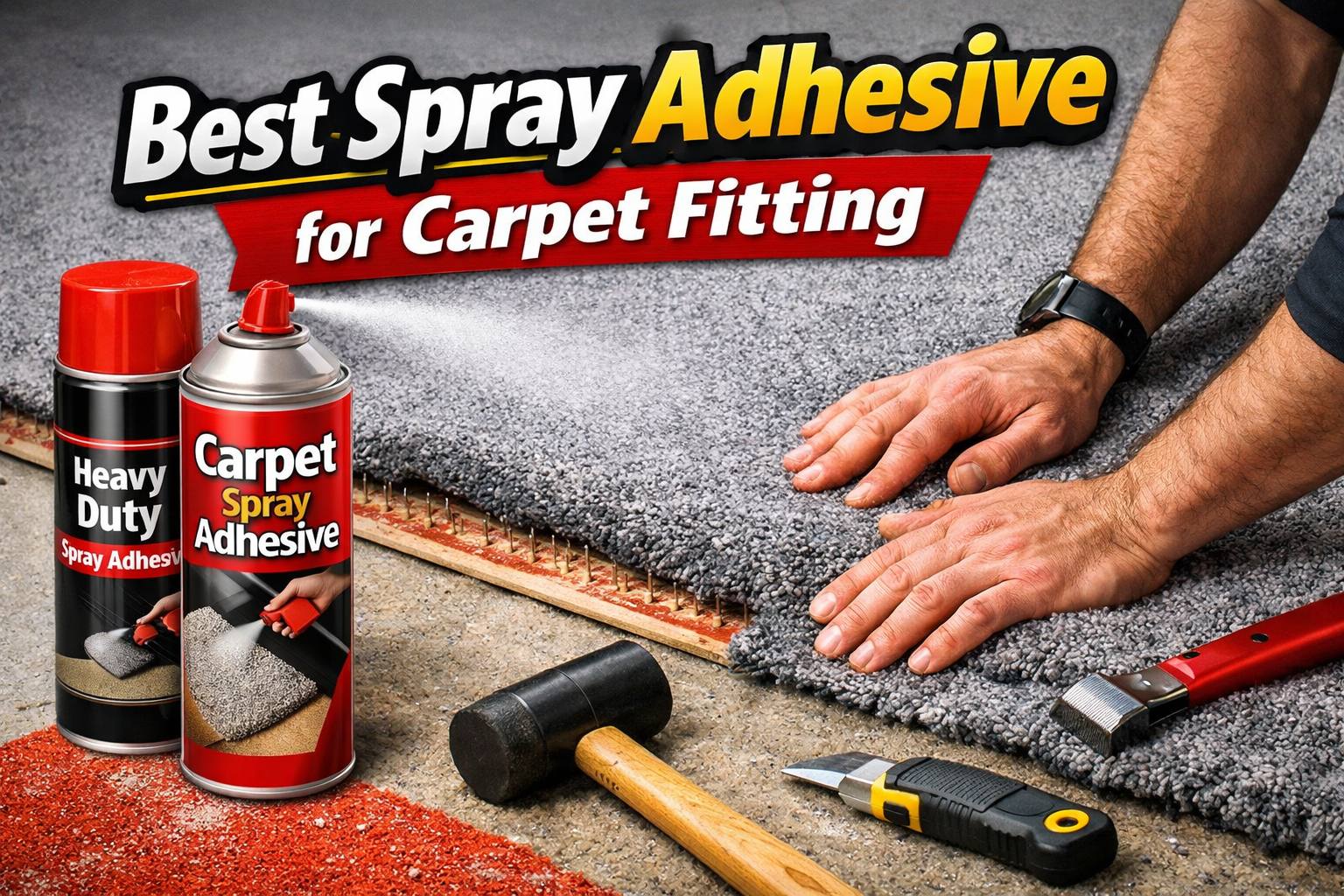
Best Spray Adhesive for Carpet Fitting (2026 UK Guide)
Choosing the best spray adhesive for carpet fitting can make the difference between a clean professional finish and a frustrating job filled with lifting edges, bubbling, weak bonds and messy overspray. Whether you’re fitting carpet tiles in an office, installing felt-backed carpet in a domestic setting, or completing a full commercial refit, the type of adhesive you use matters just as much as the carpet itself.
In this 2026 guide, we’ll cover everything you need to know about spray adhesives for carpet fitting — including what spray adhesive is, when it’s the right choice, key features to look for, common mistakes, and how to apply it for the strongest possible bond.
If you’re an installer, contractor, or DIYer in the UK looking for a reliable solution, this guide is designed to help you pick the right product first time and achieve a long-lasting finish.
Why Use Spray Adhesive for Carpet Fitting?
Carpet fitting traditionally brings to mind trowel-applied adhesives or tackifier systems, but spray adhesives have become increasingly popular in both domestic and commercial applications.
Spray adhesive is ideal because it’s:
- Fast to apply, covering large areas quickly
- Evenly distributed, reducing lumps and thick spots
- Cleaner than many wet adhesives
- Excellent for vertical and awkward surfaces, such as stair risers and carpet edging
- Useful for repairs, patching, and uplifted corners
- Great for certain carpet types, especially felt-backed, foam-backed, and lightweight floor coverings
However, not all spray adhesives are made equal. Many low-cost aerosol sprays aren’t designed for flooring use, and using the wrong product can lead to early failure.
What Spray Adhesive Is Best for Carpet Fitting?
The best spray adhesive for carpet fitting in 2026 will typically be a high-tack contact spray adhesive designed for professional use.
Unlike general-purpose spray adhesives, carpet fitting requires:
- strong initial tack
- lasting bond strength
- suitable performance under foot traffic
- resistance to temperature changes
- controlled spray pattern (to avoid overspray and mess)
The best type of spray adhesive for carpet fitting is usually:
Contact spray adhesive (high tack, strong bond, faster grab)
For certain jobs (such as temporary or repositionable carpet tiles), you may need a different approach — but for the majority of carpet installs, contact spray adhesives are the go-to.
Key Features to Look For in a Carpet Spray Adhesive (2026)
Here are the most important factors professional carpet fitters should consider when choosing a spray adhesive.
1) High Tack (Strong Initial Grab)
Carpet fitting often means working fast, cutting, stretching, positioning and pressing down.
A good spray adhesive should:
- grab quickly
- stop the carpet moving while fitting
- reduce the chance of lifting corners
- allow a strong bond as soon as pressure is applied
If you’ve ever had carpet shift slightly during installation, you’ll know how important tack is — especially around joins, door bars and edges.
2) Strong Long-Term Bond Strength
A spray might feel sticky initially, but some products lose grip over time or struggle under regular foot traffic.
The right adhesive should hold up against:
- daily walking and heavy use
- vacuuming and cleaning
- furniture movement (especially chairs)
- carpet tension in stretched areas
For commercial environments, you should only be using professional-grade products with a proven track record.
3) Suitable for Your Carpet Backing Type
Not all carpets bond the same way. Backing types vary widely, and choosing the wrong adhesive can lead to failure.
Common carpet backings include:
- felt-backed carpets
- foam-backed carpets
- woven-backed carpets
- rubber-backed carpets
- carpet tiles (PVC or bitumen backing)
Some adhesives perform brilliantly on foam, for example, but less well on rubber or dense backings.
Always check compatibility, especially for commercial carpet tiles.
4) Heat Resistance (Especially in Conservatories & South-Facing Rooms)
This is a big one that many people overlook.
In conservatories, flats with large windows, or rooms exposed to sunlight, floor surfaces can heat up. Some adhesives soften when warm and can cause:
- edges lifting
- tiles creeping or shifting
- bubbles or ripples forming
If you’re fitting carpet in warmer rooms or commercial buildings with variable temperatures, a heat resistant contact spray adhesive is worth prioritising.
5) Controlled Spray Pattern
A messy spray adhesive is a nightmare, especially indoors.
Look for a product with:
- web spray pattern or controlled mist
- minimal overspray
- strong directional control
- consistent output (no spitting)
This reduces waste and keeps your work cleaner.
6) Fast Drying / Correct Open Time
This is where many carpet fitting issues begin.
Spray adhesives typically require:
- tack time (wait until adhesive becomes tacky)
- open time (how long you can bond surfaces)
If you bond too early or too late, you can weaken the bond significantly.
You’ll want a product with:
- a predictable tack time
- enough open time to position the carpet without rushing
- a fast cure for quicker completion
Best Spray Adhesive Options for Carpet Fitting (UK – 2026)
While exact product choice depends on the job, here are the main adhesive “types” you should consider.
Option 1: High Tack Contact Spray Adhesive (Best All-Rounder)
This is generally the best choice for carpet fitting, particularly for:
- felt-backed carpet
- foam-backed carpet
- stair carpets
- edge fixing / corners
- repair work
Pros
- super strong tack
- great for edges and stairs
- faster installation
- professional finish
Cons
- not repositionable once bonded
- requires correct tack time
Option 2: Repositionable Spray Adhesive (Best for Carpet Tiles)
Some carpet tile installs (offices, temporary spaces, raised floors) need tiles to be removable for maintenance or replacement.
A repositionable system:
- holds tiles in place
- allows lifting individual tiles later
- reduces damage during removal
However, these adhesives aren’t designed for stairs or heavy permanent bonding.
Option 3: Bulk Spray Adhesive (Best for Contractors / Large Jobs)
If you’re fitting carpet regularly, aerosols may not be the most cost effective option.
Many installers move to:
- bulk spray adhesives
- pressure pot spray systems
- professional applicators
These are ideal for:
- larger surface coverage
- consistent output
- lower cost per m²
- trade / commercial environments
How to Apply Spray Adhesive for Carpet Fitting (Step-by-Step)
Using a top-tier spray adhesive can still lead to problems if applied incorrectly. Here’s the method you should follow for best results.
Step 1: Prepare the Surface
Your surface should be:
- clean
- dry
- dust-free
- stable
Remove:
- old adhesive residue
- loose debris
- oil/grease
- damp patches
A poorly prepared floor is the #1 reason adhesives fail.
Step 2: Test a Small Area First
Always do a patch test, particularly when bonding:
- rubber-backed carpets
- certain carpet tiles
- sensitive foam materials
This prevents unexpected reactions (such as adhesive bleed-through or weak grip).
Step 3: Shake Well & Spray Evenly
Hold the can or spray gun at a consistent distance (usually around 15–20cm depending on the product) and apply:
- even passes
- overlapping slightly
- avoiding thick patches
Aim for full coverage without saturating the surface.
Step 4: Allow Tack Time
Most contact spray adhesives require you to wait until the glue becomes tacky.
If you join too soon:
- adhesive stays wet
- carpet can slide
- bond becomes weaker
If you wait too long:
- adhesive loses tack
- you may get poor bonding
Follow manufacturer instructions, but as a rule, you want it:
– tacky, not wet
– sticky to the touch but not transferring
Step 5: Lay Carpet and Apply Pressure
Once positioned:
- press from the centre outward
- avoid trapping air
- use a carpet roller where possible
- pay attention to seams and edges
Pressure activates the adhesive bond.
Step 6: Leave to Cure
Avoid heavy traffic immediately after fitting.
If possible:
- keep people off for several hours
- avoid dragging furniture
- allow full cure time where specified
Common Mistakes When Using Spray Adhesive for Carpet
To get the best results, avoid these common issues:
Using a general-purpose craft spray
These aren’t designed for flooring and may fail quickly.
Spraying too much adhesive
Over-application can cause:
- soaking
- bleed-through
- longer drying time
- weaker bond
Not waiting for tack time
Carpet slips, moves, bubbles — and you end up redoing work.
Fitting on dusty or damp surfaces
Even the best adhesive won’t bond properly on a contaminated surface.
No pressure applied after bonding
Contact adhesives need pressure to lock the bond.
Is Spray Adhesive Strong Enough for Carpet?
Yes — if you use the right product.
Professional contact spray adhesives are extremely strong and widely used in:
- flooring
- upholstery
- automotive trimming
- panel fitting
- interior refits
The key is choosing a product intended for heavy-duty bonding, not cheap multi-purpose sprays.
FAQs: Spray Adhesive for Carpet Fitting
Can I use spray adhesive for carpet tiles?
Yes. For carpet tiles, many installers prefer repositionable tackifier spray adhesives, especially for commercial environments where tiles may need replacing later.
Will spray adhesive bleed through carpet?
It can if:
– you apply too much
– the carpet backing is thin
– you choose the wrong adhesive type
A controlled web spray + correct application prevents most bleed-through issues.
Is spray adhesive OK for stairs?
Yes — in fact, spray adhesives can be excellent for stairs due to:
– quick grab
– ability to bond vertical surfaces
– cleaner application than wet adhesive
A high tack contact spray is usually best.
How much spray adhesive do I need?
Coverage varies by product, but factors include:
– spray pattern
– surface porosity
– carpet type
– number of coats
For large jobs, bulk spray systems become significantly more cost-effective.
Final Thoughts: Choosing the Best Spray Adhesive for Carpet Fitting in 2026
In 2026, the best spray adhesive for carpet fitting is typically a high tack contact spray adhesive that offers strong grab, reliable long-term bonding, and consistent spray control.
For professional results, focus on:
- tack strength
- compatibility with carpet backing
- heat resistance
- predictable open time
- controlled spray pattern
Whether you’re working on domestic stairs, commercial flooring, carpet tiles, or repairs, using the right adhesive will save you time, reduce call-backs, and deliver a far cleaner finish.


Add comment