
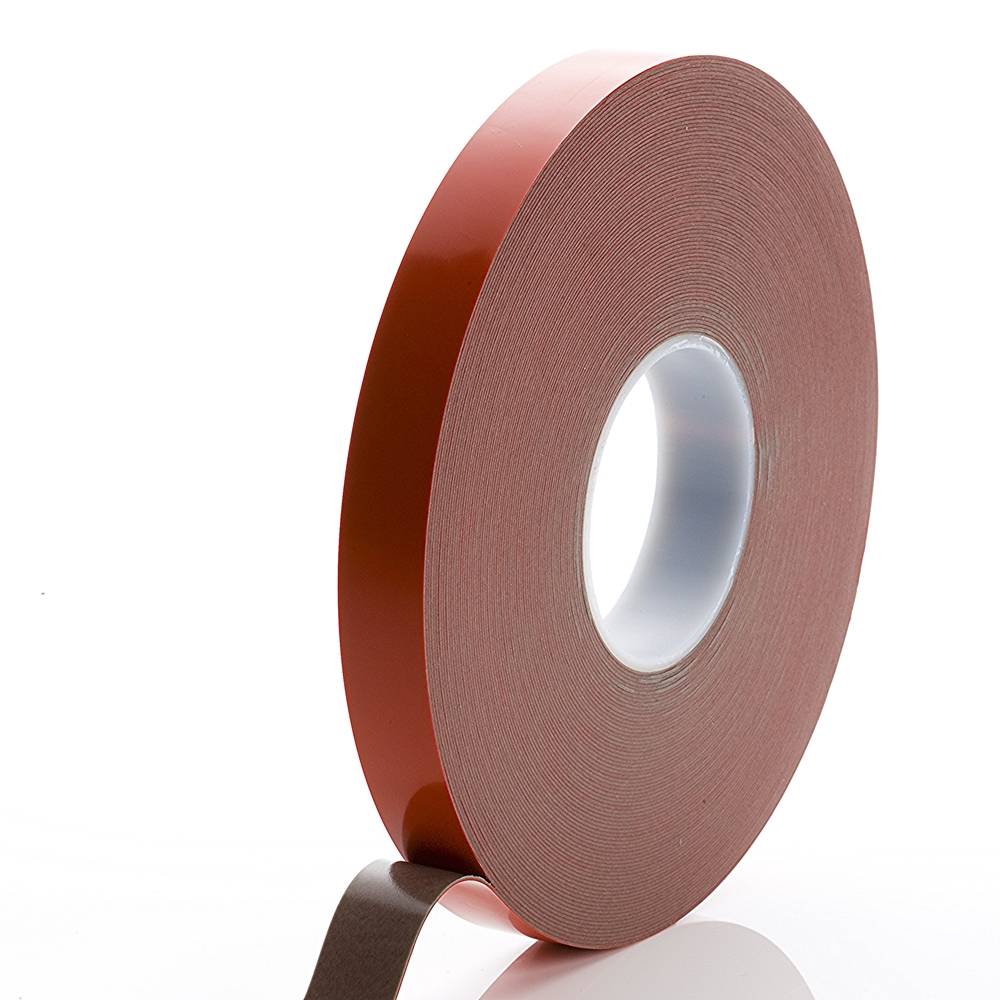
A UK Guide to Structural Acrylic Foam Tape
This guide explains what structural acrylic foam tape is, how it works, which applications it may suit, and how to choose a grade for your project.
What structural acrylic foam tape is
Structural acrylic foam tape is a double-sided pressure-sensitive tape used for bonding. Check the selected product’s technical data for its construction, suitable substrates, and application limits.
Browse our range of structural acrylic gel foam tapes.
How acrylic foam tape works
A continuous tape bond can spread load across the bonded area. Joint performance depends on the tape grade, bonding surfaces, applied load, and environment.
Weather resistance depends on the selected tape and joint design. Check the product specifications for outdoor use.
Where acrylic foam tape is used
The range of applications is enormous, but a few industries dominate:
Architecture and construction. Select tape specified for the intended cladding, glazing, or trim application and follow the relevant joint design requirements.
Transport and automotive. Acrylic foam tapes are used for selected body trim, moulding, badge, and interior panel applications. Our double sided foam tapes category includes automotive-grade options used heavily for exterior trim and decal mounting.
Signage and point of sale. Applications include aluminium sign channels, acrylic lettering, Dibond panels, illuminated signs, and shopfront displays. For clear acrylic and glass where the bond line needs to be invisible, our clear structural acrylic gel foam tapes with red liner are the go-to specification.
Electronics and appliances. Touchscreen bonding, nameplate attachment, LED strip mounting, and heat sink fixing all use specialist grades. Thermally conductive grades can provide both a bond and a thermal interface where specified for that use.
Manufacturing and industrial assembly. Panel-to-frame bonding, stiffener attachment, gasket mounting, and general assembly where welding or riveting would be slower, uglier, or incompatible with the materials.
Choosing the right structural acrylic gel tape
Structural acrylic foam tapes are available in different grades for different substrates, environments, and load profiles. Check the tape specification against the application requirements.
Three things determine which grade you need.
1. Surface energy of your substrate
Surface energy is the property that determines how well an adhesive can “wet out” onto a surface and form intimate molecular contact. It’s measured in dynes per centimetre.
High surface energy (HSE) substrates include metals (steel, aluminium, stainless), glass, and most painted or powder-coated surfaces in good condition. These accept a wide range of standard acrylic foam tapes and are the easiest to bond.
Low surface energy (LSE) substrates include polypropylene (PP), polyethylene (PE), some TPO/TPE blends, PTFE, and certain powder coatings with silicone or wax additives. These are notoriously difficult — adhesives tend to bead up rather than spread, leading to weak bonds or clean peel-off after 24–72 hours.
For LSE substrates, you need a tape specifically formulated for low surface energy. Our black structural acrylic gel foam tapes with red liner are engineered for exactly this — they give excellent bond strength on polypropylene and polystyrene. Our grey structural acrylic gel foam tapes are similarly formulated for powder-coated surfaces and for low application temperatures approaching freezing.
2. Environment and temperature
Standard acrylic foam tapes handle most UK exterior conditions comfortably — they’re designed to resist UV light, moisture, and temperature cycling for decades. But extreme applications need specific grades. Engine bays, spray booths, and industrial ovens can exceed 150°C, which is outside the range of standard grades and requires a high-temperature specialist tape.
At the other end, cold-application grades exist for situations where the tape must be fitted in near-freezing temperatures — winter site installations, unheated warehouses, refrigerated transport. Fitting a standard acrylic tape below about 10°C will usually result in poor initial wet-out and a weak long-term bond.
3. Thickness and gap-filling
Tape thickness is not just about strength — it’s about how much surface irregularity the tape can accommodate.
As a general rule, the mismatch between your two bonding surfaces should be less than half the tape’s thickness to ensure full contact under pressure. If you’re bonding two flat, rigid, precisely-machined surfaces, a 0.5mm tape is ample. If you’re bonding textured panels, powder-coated profiles, or substrates with minor warping, a 1mm or thicker tape is essential to bridge the gaps.
Our clear structural acrylic gel foam range runs from 0.5mm up to thicker grades, with widths from 6mm to 25mm available off the shelf and custom converting available on request.
Application technique — why most failures happen
The three rules that prevent the vast majority of bond failures are straightforward.
Surface preparation. Wipe both surfaces with a 50:50 mixture of isopropyl alcohol (IPA) and water, or a dedicated tape primer wipe. Do not use domestic cleaning products — they leave silicone or surfactant residues that prevent adhesion. The surface must be dry before tape is applied. Our adhesive advice centre has a full surface preparation guide.
Application pressure. Structural acrylic gel tapes are pressure-sensitive adhesives, and that “pressure-sensitive” bit isn’t decorative. You need to apply firm, sustained pressure across the entire bond line — roughly 15 psi (around 100 kPa), which means pressing hard enough to see the adhesive wet out against the substrate. A roller is the correct tool. Hand pressure on a long bond line is rarely enough.
Dwell time. Acrylic foam tapes build strength over time. They typically reach around 50% of final bond strength within the first hour, 90% at 24 hours, and full strength at 72 hours. Don’t load the bond, move the assembly, or test-pull on it during that 72-hour window if you want full performance.
Application temperature matters too — most grades specify 15°C to 38°C for initial application, though cold-grade tapes extend this downward. Below 10°C, standard tapes will bond poorly regardless of how long you leave them.
Common questions
Can acrylic foam tape be removed? Tapes designed for permanent bonds can be difficult to remove. Applying heat (a hot air gun at low setting) softens the adhesive and allows careful peeling. A suitable adhesive remover may help lift residual adhesive after removal; check compatibility with the substrate. For more detail, see our guide on duct tape and adhesive residue removal.
Is acrylic foam tape waterproof? Water resistance depends on the product and application. Check the technical data sheet for the relevant environmental and sealing requirements.
How much weight can acrylic foam tape hold? It depends on the tape grade, bond area, and stress type, including static or dynamic loads and shear or peel forces. Follow the product-specific load guidance and joint design requirements.
Can acrylic foam tape be used outdoors? Select a grade specified for the expected UV, moisture, and temperature conditions, and follow the manufacturer’s application guidance.
When acrylic foam tape may not be suitable
Suitability depends on the selected product and application. Check the product guidance where:
- The substrate is untreated polyolefin (raw PP or PE) and you can’t use an LSE-specific grade or surface primer
- The bond will be loaded in pure peel or cleavage, particularly at long narrow edges
- The application requires rapid full-strength loading within minutes (standard acrylic foam tapes need 24–72 hours to reach full strength)
- The substrate is flexible to the point of continual movement under shear beyond roughly three times the tape thickness
- The surface is contaminated with silicone, mould release, or oily residue that cannot be removed
A specialist tape, primer, or adhesive may be required for these applications.
Choosing a supplier
Structural acrylic gel foam tapes are specification-sensitive products. Buying the wrong grade — wrong surface energy class, wrong thickness, wrong temperature range — is the single biggest cause of bond failure, and no amount of good technique rescues a misspecified tape.
At PSA Solutions, we’ve been supplying pressure-sensitive adhesive technology to UK industry since 2001. Our range includes structural acrylic gel foam tapes in clear, white, black, and grey variants — including LSE-specific and cold-application grades — with most orders dispatched from our Leicester warehouse within 2–3 working days. If you’re not sure which grade fits your application, our technical team can usually specify the right tape from a description of your substrates, environment, and load. Call us on 0116 286 5141 or email [email protected].


Add comment