
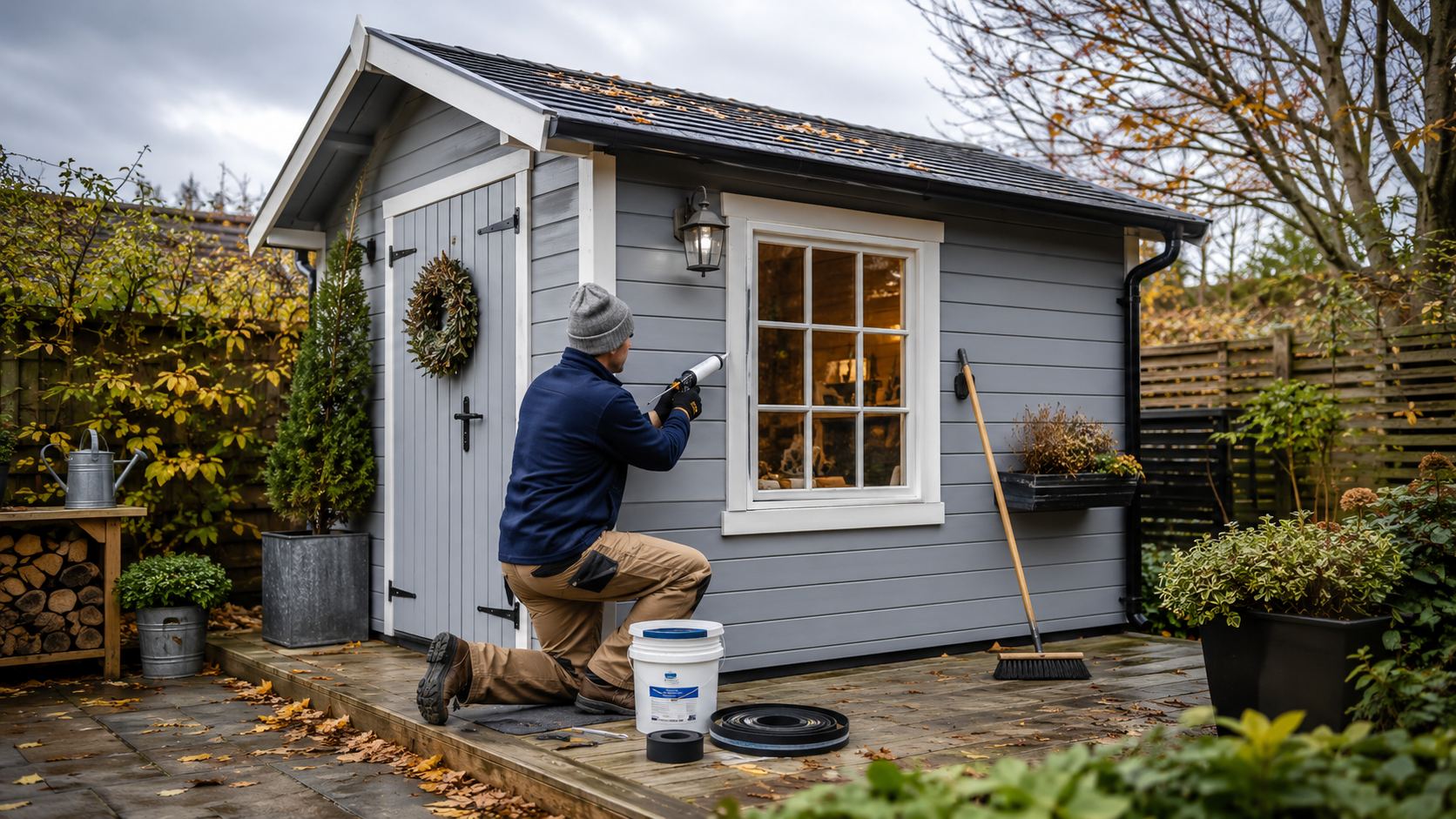
How to Weatherproof a Shed or Summerhouse Before Winter
A shed or summerhouse takes the full force of a British winter — driving rain, damp, wind and frost — and timber is unforgiving once water finds its way in. Leave it unprotected and you’ll open the door in spring to mould on the walls, soft, rotten timber at the base, rusted tools and a musty smell that never quite leaves. Spend one dry weekend now sealing and treating it, though, and you’ll keep everything inside dry and the structure sound for years.
This guide runs through weatherproofing a shed or summerhouse properly and in the right order: the roof first, then the gaps around doors and windows, then the walls, damp control and the timber itself.
Why sheds and summerhouses suffer in winter
Timber sheds move constantly — the wood swells when wet and shrinks when it dries, and over the years that working opens up gaps at joints, around frames and where cladding boards meet. Felt roofs are usually the first thing to fail, splitting and lifting in the wind. Then there’s condensation: a closed-up timber building with no airflow sweats on the inside as the temperature swings, and that internal moisture rots wood just as surely as a leak. Add wind-driven rain, which finds every weakness, and a shed that looked fine in August can be letting water in by December.
The fix is to seal the obvious water routes, control the damp, and protect the wood — before the weather turns.
Do it during a dry spell
Timing matters. Tapes, sealants and wood treatments all need dry timber and mild temperatures to work — most want a surface that’s genuinely dry and ideally around 10°C or above. That’s why autumn, on a settled dry weekend, is the moment to do this. Trying to weatherproof a soaking wet shed in freezing December rain is a wasted afternoon.
Start at the top: the roof
Most shed leaks come from the roof, so start here.
Inspect the felt for splits, tears, lifting edges and popped nails, and pay close attention to the ridge, the eaves and any overlaps. Where the felt is sound but a seam or split has opened up, seal it with butyl flashing tape — a foil-faced butyl tape that stays flexible through the cold and forms a permanent watertight seal over splits, seams and along the apex. Work from the bottom of the roof upwards so each piece overlaps the one below like tiles, and press it down firmly. On old, porous felt, brush it clean, let it dry and use a surface primer first — it makes a big difference to how well the tape grips. The 150mm × 10m roll suits most shed seams and ridges.
Be realistic, though: if the felt is brittle and breaking up across the whole roof, tape is only a patch — re-felting is the proper fix. (Our full guide to repairing a leaking flat or shed roof in the Advice Centre walks through both.)
Seal the gaps around doors and windows
This is where a lot of draughts and wind-driven rain get in, and it’s worth understanding that there are two different gaps here, needing two different products — getting this right is the difference between a proper seal and a door that won’t shut.
The fixed perimeter gap — where the window or door frame meets the timber wall — is a permanent gap you want to fill and seal. Use an expanding foam tape for this. It’s a pre-compressed foam that expands up to five times its thickness to fill gaps up to 50mm deep, forming a permanent, flexible weather seal against wind, dust and driving rain around the frame. The 4–10mm and 9–20mm sizes cover most frame gaps.
The closing gap — the moving joint where the door or window itself shuts against its frame — needs a compressible seal, not an expanding one. Here you want a single-sided EPDM weatherseal foam tape, a sponge rubber strip that squashes down to seal when the door is closed but springs back so it still opens freely.
Don’t mix these up. Never put expanding foam tape in the opening of a door or window — it’s designed to stay permanently compressed, so it’ll expand once the door is open and stop it closing altogether. Expanding foam for the frame perimeter; single-sided foam for the closing gap.
Seal the wall joints and cladding
Work around the building looking for gaps where cladding boards have shrunk apart, where corner trims have lifted, and — on a sectional shed or summerhouse — where the panels bolt together. These joints are a common route for wind-driven rain. Reseal open panel joints and corners with butyl flashing tape, and check that overlapping boards still shed water downwards rather than channelling it inwards. A wider single-sided foam tape is useful for cushioning and sealing the joints between bolt-together panels.
Control damp and condensation
Here’s the counter-intuitive part: don’t seal the building up completely airtight. A shed with no ventilation will sweat on the inside all winter and rot from within, even if not a drop of rain gets in. Balance sealing the leaks with keeping some airflow:
- Keep any air vents or airbricks clear — don’t block them.
- Raise stored items off the floor on shelving or pallets so air can move and damp can’t wick up into them.
- Add moisture-trap tubs and refresh them through the winter.
- Don’t store anything damp inside, and keep the door openable so you can air it on dry days.
If it’s a summerhouse you actually use, insulating the walls and roof is worth doing — but always pair insulation with a ventilation and vapour strategy, or you’ll trap condensation behind it.
Protect the timber itself
Sealing keeps water out; treating keeps the wood itself from rotting where it does get wet. Before winter, scrub off any green algae and mould, let the timber dry, and apply a good wood preserver, treatment or exterior paint. Pay special attention to the end grain, the bottom rail and any bare, weathered or previously untreated wood, as these soak up water fastest, along with the window frames and door. Most treatments need dry wood and a dry day to cure — another reason to do this in autumn rather than mid-winter.
Don’t forget the base and surroundings
- Clear the gutters and downpipes if the shed has them, so winter rain drains away instead of overflowing down the walls.
- Check water drains away from the base — a shed sitting in a puddle will rot at the bearers. Improve the drainage or lift it onto proper bearers if needed.
- Trim back overhanging branches and foliage that drip onto the roof and hold damp against the walls.
- Sweep leaves and moss off the roof, which trap water on the surface.
Quick weatherproofing checklist
- Roof felt inspected; splits and seams sealed with flashing tape, or re-felted if shot
- Frame perimeter gaps filled with expanding foam tape
- Door and window closing gaps sealed with single-sided weatherseal foam
- Wall joints, corners and panel seams sealed
- Vents kept clear, items raised off the floor, moisture traps in
- Timber cleaned, dried and treated or painted
- Gutters cleared, base draining well, foliage cut back
Frequently asked questions
How do I stop my shed leaking in winter? Deal with the roof first — repair split or lifting felt and seal the seams and ridge with butyl flashing tape, working from the bottom up so pieces overlap. Then seal the gaps around doors, windows and panel joints, and keep any gutters clear. If the felt is perished all over, re-felt rather than patch.
What’s the best way to seal shed windows and doors? Use expanding foam tape around the fixed frame perimeter and a single-sided weatherseal foam on the moving closing gap. Don’t use expanding foam in the opening itself — it will expand and stop the door or window closing.
How do I stop condensation and damp in a shed? Don’t seal it airtight. Keep some ventilation, raise stored items off the floor, use moisture traps, and avoid storing anything damp inside. Condensation is trapped moisture with nowhere to go, so a little airflow prevents it.
Can I weatherproof a shed in winter? It’s much better done in a dry autumn spell. Tapes, sealants and wood treatments all need dry timber and mild temperatures to bond and cure, so get it done before the cold and wet set in.
Should I insulate my summerhouse? If you use it through the colder months, yes — but always combine insulation with proper ventilation and a vapour barrier, or you’ll trap condensation in the walls and cause the rot you were trying to prevent.
How often should I treat the timber? Most exterior wood treatments need refreshing roughly once a year, ideally before winter, though always follow the product’s guidance. Bare and weathered patches need doing sooner.
PSA Solutions are sealing and weatherproofing tape suppliers based in Leicestershire, with butyl, expanding foam and weatherseal tapes in stock and usually dispatched within 2–3 working days. Not sure which tape suits which gap? Contact the team for free advice, and visit the Adhesive Advice Centre for more practical how-to guides.



Add comment