
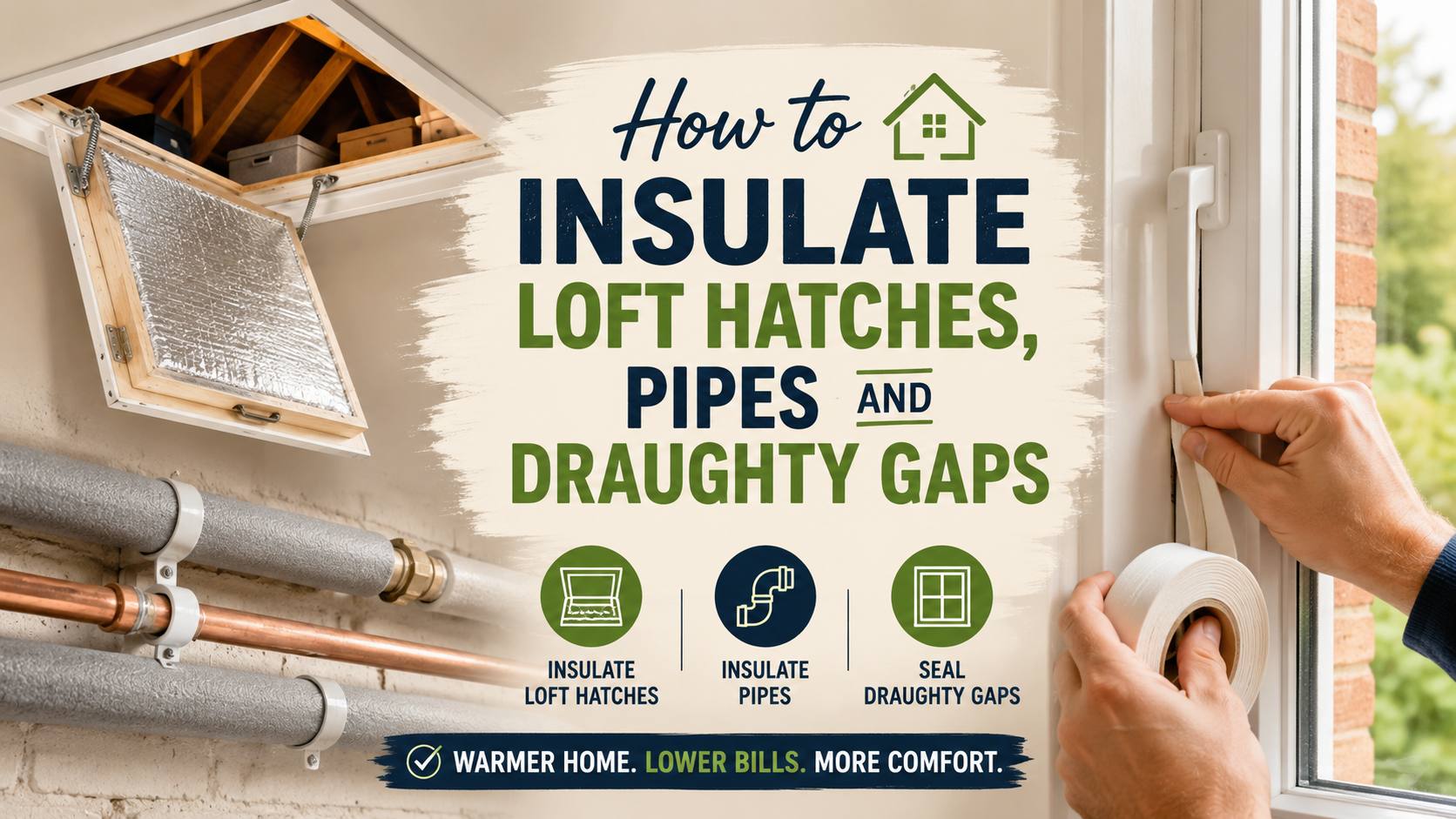
How to Insulate Loft Hatches, Pipes and Draughty Gaps (UK Guide)
Some of the cheapest jobs in the house give the biggest return. A draughty loft hatch, bare pipes in a cold loft and unsealed gaps around pipework quietly leak heat all winter — and worse, leave pipes at real risk of freezing and bursting when the cold snap comes. An afternoon with a few rolls of foam and foil tape seals the lot, trims your heating bills and takes the frozen-pipe worry off your mind.
This guide covers all three jobs — the loft hatch, the pipes and the draughty gaps — plus the loft safety points that genuinely matter before you start crawling around up there.
Why these small jobs matter so much
Heat rises, so the loft is where a warm house loses it fastest. Even with the loft floor insulated, an uninsulated, draughty hatch is a hole in that blanket, and every gap where a pipe or cable passes through the ceiling is a little chimney letting warm air escape and cold air in. Meanwhile, any pipe running through a cold loft or unheated garage is exposed: water freezes, expands, and splits the pipe, and you don’t find out until it thaws and floods the ceiling below.
Sealing draughts is the single cheapest energy saving there is, and lagging pipes is cheap insurance against a very expensive burst. Both are best done now, before winter.
Insulating and draught-proofing the loft hatch
There are two separate things to fix here: the draught around the hatch, and the lack of insulation in the hatch itself.
Stop the draught. Treat the hatch like a fridge door — it needs a seal that compresses when it’s closed. Run a strip of single-sided EPDM weatherseal foam tape around the edge where the hatch meets its frame, so it squashes down to seal the gap when shut but springs back when you open it. The wider single-sided foam range covers larger or more uneven gaps.
Insulate the board. A bare plywood hatch conducts heat straight out. Fix a piece of rigid insulation board (or an offcut of loft roll) to the loft side of the hatch. If you’re using foil-faced insulation board, seal the edges and any joins with aluminium foil tape to keep the foil vapour barrier continuous and stop draughts creeping around the edges.
Make sure it still closes tightly. Adding a seal and insulation means the hatch now needs to be pulled down firmly onto the seal — check the catch still latches and compresses the foam. If it just rests loosely, fit a simple turn-catch so the seal actually does its job.
Insulating pipes in cold spaces
Any pipe in a loft, garage, outhouse or under a suspended floor is worth lagging — cold water pipes to stop them freezing, and hot water and heating pipes to stop them wasting heat.
Fit foam pipe lagging along the straight runs, butting the joints up tight. The critical part is that you seal every joint, elbow and the lengthwise seam, because a gap is exactly where cold air tracks under the lagging and reaches the pipe. Seal them with foil tape, wrapping it around each join and along any seam. In an unheated loft — which is cold and often damp — reach for the cold-weather aluminium foil tape: a standard adhesive struggles to bond to a cold surface and lifts, whereas the cold-weather version is engineered to grip at low temperatures and keeps getting stronger as it cures. The 72mm width is easy to wrap around most domestic pipework.
For the awkward bits that rigid lagging won’t fit — stop-taps, valves, bends and the pipe as it enters a tank — wrap and seal them with foil tape so no bare metal is left exposed. Those fittings are often the first thing to freeze precisely because they’re the hardest to lag.
Sealing draughty gaps
With the hatch and pipes done, work around the rest of the cold-air routes:
- Where pipes and cables pass through ceilings, walls and floors: these penetrations are common draught points. Seal small gaps with foil tape (which also maintains the vapour barrier), and use an expanding foam tape or sealant for larger ones.
- Around window and door frames (the fixed perimeter gap): expanding foam tape is made for this — it expands to fill gaps up to 50mm and forms a permanent weather seal around the frame.
- The moving gaps where a door, window or hatch closes: use single-sided or EPDM weatherseal foam, never expanding foam — expanding tape stays permanently compressed and would stop the door closing.
- Gaps under skirting and between floorboards: draught-seal or fill these where cold air rises up from below.
A quick reminder on those last two frame points: expanding foam tape for the fixed perimeter, single-sided foam for anything that has to open and close.
The loft safety rules you must follow
A loft is an easy place to cause an accident or a hidden problem, so keep these in mind:
- Never insulate directly underneath a cold water tank. Leave the area beneath it clear so warmth rising from the house below reaches the tank and helps stop it freezing. You should, however, insulate the sides and top of the tank itself.
- Don’t cover recessed downlights, transformers or electrical fittings with insulation unless they’re specifically fire-rated for it — trapped heat is a fire risk. Keep the required clearance around them.
- Don’t block the eaves ventilation. A loft needs airflow to stay dry; seal it up completely and you’ll trade a draught for condensation and damp. Keep the vents at the eaves clear.
- Watch your footing. Only stand or kneel on the joists or on boarded areas — the plasterboard ceiling between them won’t take your weight. Use a crawl board, take a light, and wear gloves and a mask when handling insulation.
- Mind buried cables. Electrical cables run under thick insulation can overheat; for anything significant, have an electrician check it.
Getting a seal that lasts
Whichever tape you use, a clean surface is everything. Wipe pipework, hatch edges and frames with an IPA cleaning wipe to remove dust and grease before you apply anything, press the tape down firmly, and work on a mild, dry day. In a cold loft, the cold-weather foil tape is the one that will actually stay stuck.
Quick checklist
- Loft hatch edge draught-stripped and the board insulated, catch holding it tight
- Pipes lagged, with every joint, elbow, valve and seam sealed with foil tape
- Cold-weather foil tape used in the unheated loft
- Pipe and cable penetrations sealed; frame perimeters filled with expanding foam
- Doors, windows and hatch sealed with single-sided foam
- Area under the cold tank left clear; downlights and eaves vents kept clear
- Surfaces cleaned before taping, everything pressed down firmly
Frequently asked questions
How do I stop draughts coming through my loft hatch? Run a compressible weatherseal foam tape around the edge so the hatch seals when closed, insulate the hatch board with rigid insulation or loft roll, and make sure the catch pulls it tight onto the seal. Treat it like sealing a fridge door.
What tape do I use to seal pipe insulation? Foil tape, wrapped around every joint, elbow and along the seam so cold air can’t track underneath. In an unheated, cold loft, use a cold-weather foil tape, which bonds reliably at low temperatures where standard tape lifts.
How do I stop pipes freezing in the loft? Lag every pipe, seal all the joints and fittings with foil tape, and pay special attention to valves and bends. Crucially, don’t insulate the loft floor directly beneath the cold water tank — that rising warmth is what helps keep the tank from freezing.
Can I insulate under the cold water tank? No. Leave the floor area directly beneath the tank uninsulated so heat from the room below can reach it, while insulating the sides and top of the tank itself.
What’s the best tape for sealing draughty gaps? Expanding foam tape for the fixed gaps around window and door frames, single-sided or EPDM weatherseal foam for gaps that open and close, and foil tape for sealing around pipe and cable penetrations while keeping the vapour barrier intact.
Do I still need loft ventilation if I seal everything up? Yes. Don’t block the eaves vents — a loft needs airflow to prevent condensation and damp. Seal the draughts that waste heat, but keep the designed ventilation clear.
PSA Solutions are foam and foil tape suppliers based in Leicestershire, with weatherseal, expanding foam and aluminium foil tapes in stock and usually dispatched within 2–3 working days. Not sure which tape suits which gap? Contact the team for free advice, and visit the Adhesive Advice Centre for more practical how-to guides.



Add comment