
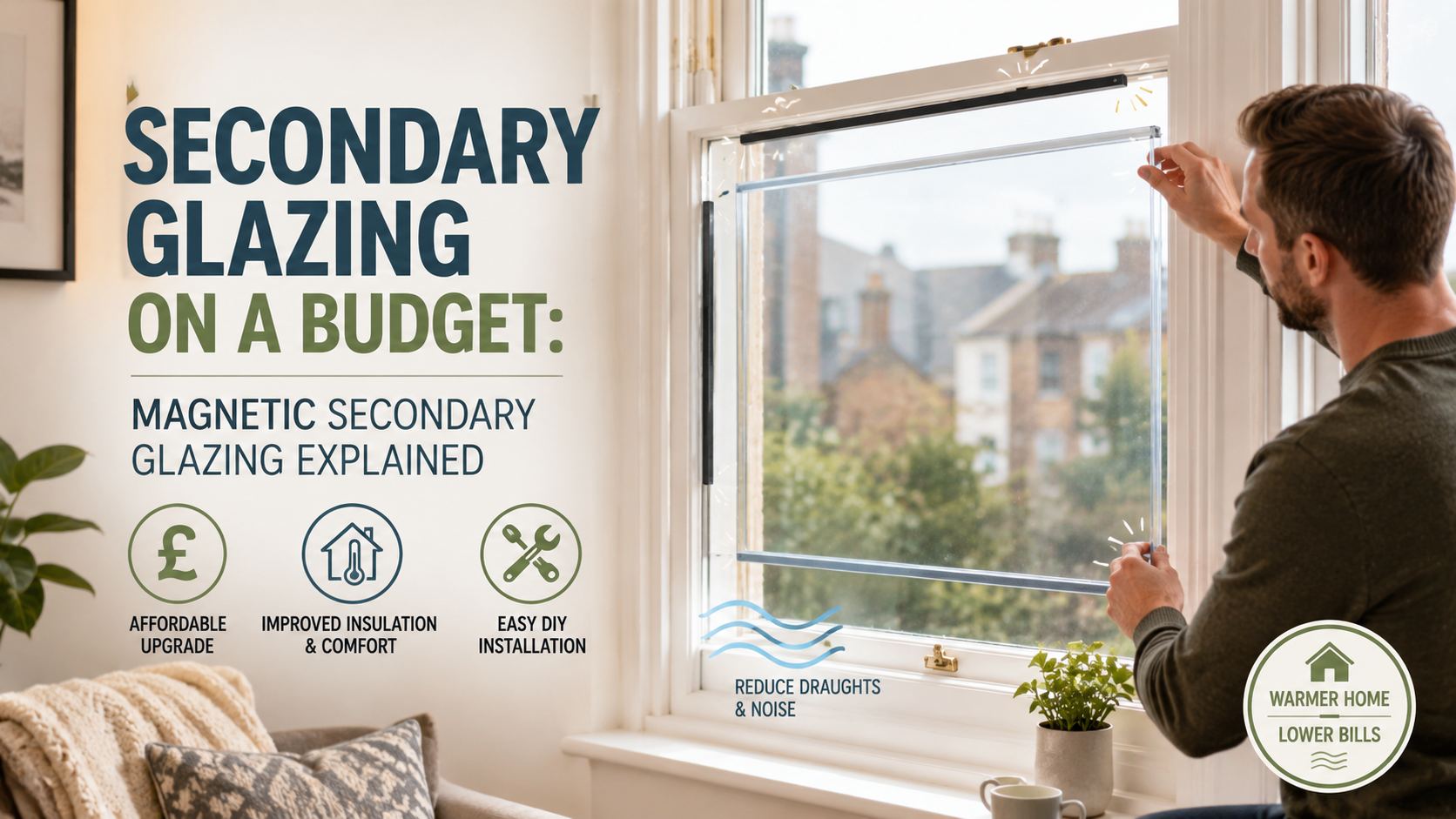
Secondary Glazing on a Budget: Magnetic Secondary Glazing Explained (UK Guide)
With energy bills where they are, cold single-glazed and older windows are an expensive weak spot in a lot of British homes. The obvious fix — replacing the windows or fitting sealed double glazing — runs into thousands of pounds, and in a rented flat or a listed building it often isn’t allowed at all.
Magnetic secondary glazing is the low-cost, do-it-yourself answer. A slim clear acrylic panel is held over your existing window by a magnetic tape system, creating an insulating pocket of trapped air that cuts heat loss, draughts, noise and condensation — for a fraction of the cost of new windows, with no drilling and nothing that can’t be reversed. This guide explains how it works, what it will and won’t do, and how to fit it yourself.
What is magnetic secondary glazing?
Secondary glazing is a second, inner pane fitted over your existing window rather than replacing it. The gap of trapped air between the two panes is what does the work — air is a poor conductor of heat, so that pocket slows the heat escaping through the glass and dampens sound coming in.
The “magnetic” part is what makes it so practical. Instead of a fixed frame, the acrylic panel is held on with a magnetic tape system, so it snaps neatly into place and lifts straight off again whenever you want to open the window, clean the glass or take it down for the summer. That removability is the whole appeal.
How the magnetic system works
The clever bit is a two-tape system, and PSA’s magnetic secondary glazing attachment kit contains everything except the acrylic panel itself. Each kit is made up of three things:
- A white-faced steel tape with a premium adhesive backing, which goes on the window frame.
- A magnetic tape with a foamed-acrylic adhesive backing, which goes around the perimeter of the acrylic panel.
- An IPA cleaning wipe for prepping the surfaces.
When you offer the panel up to the frame, the magnetic tape grips the steel tape and holds the panel firmly in place — and it releases just as easily when you pull it off. No screws, no hinges, no holes.
Why it’s such a good budget upgrade
For the money, few home improvements return as much as secondary glazing over single glazing:
- It cuts heat loss and heating bills. The insulating air gap slows the heat escaping through the window, keeping rooms warmer for less.
- It kills draughts. A well-sealed panel stops the cold air leaking around an old window.
- It reduces outside noise. A wider air gap than sealed double glazing actually makes secondary glazing very effective against traffic and street noise — a real bonus on a busy road.
- It reduces condensation on the main window by keeping the inner surface warmer.
- It’s removable. Lift the panel off to open the window, clean it, or store it in summer, then snap it back on.
- It causes no damage. With no drilling or permanent fixing, it’s ideal for renters who need to hand the property back as they found it.
- It’s reversible and discreet. That makes it one of the few options open to owners of listed buildings, homes in conservation areas, and period properties with original sash or timber windows that can’t be altered.
- It’s a fraction of the cost of replacement double glazing.
Which kit: regular or irregular windows?
This is the choice that decides how well your panel seals, so it’s worth getting right:
- Regular kits are for true, flat, modern window frames. The steel tape has a premium adhesive that bonds firmly to a sound, even surface. Choose these for most uPVC and straight, flat timber frames — available in 5 metre and 15 metre rolls.
- Irregular kits are for older, uneven or heritage frames. Here both the magnetic and steel tapes carry a foamed-acrylic adhesive, which conforms better to an uneven surface and copes with the differing expansion and contraction of older materials — think Crittall metal windows, period timber and anything not perfectly flat. Available in 5 metre and 15 metre rolls.
To work out which length you need, measure right around the perimeter of each window you’re glazing and add the totals together.
What you’ll need
- The right attachment kit (above), enough for the total perimeter of your windows
- A clear acrylic (Perspex) panel for each window, cut to size — acrylic is lightweight, optically clear and around ten times more impact-resistant than glass, which makes it ideal and much safer to handle than a sheet of glass
- A tape measure, and a roller to press the tapes down
- Extra IPA cleaning wipes if you’re doing several windows
Measure carefully and have the acrylic cut to fit the area you’re covering — either across the face of the frame or set into the reveal, depending on your window. Accurate sizing is what makes the finished result look neat rather than obviously DIY.
How to fit it, step by step
PSA publishes a full application guide, and the method is straightforward:
- Clean both surfaces. Wipe the window frame and the edge of the acrylic panel with the IPA wipe so they’re clean, dry and free of condensation. This is the step that decides how well the tapes bond.
- Tape the panel. Apply the foam-backed magnetic tape around the perimeter of the pre-cut acrylic, removing any protective film first. Press it down firmly with a roller to secure the bond and squeeze out any air pockets.
- Tape the frame. Mark out where the panel will sit, then apply the steel tape to the frame, removing its release liner. Roller it down firmly too.
- Apply the two tapes separately first. Don’t stick the tapes together and then try to apply them — each one needs to bond to its own surface independently.
- Wait at least 8 hours. Leave both tapes to build up their full bond strength before you present the panel to the frame. Rushing this is the most common reason a panel later pulls a tape loose.
- Fit the panel. Offer the acrylic up to the frame and let the magnets snap it into place. To remove it, simply peel it away — it re-seats on the magnets every time.
Tips for the best results
- Work in a warm, dry room. Adhesives bond best in the warm, so if you’re fitting in winter, make sure the room and surfaces aren’t cold or damp.
- Degrease thoroughly. Any dust, grease or condensation on the frame will weaken the bond — clean it properly first.
- Roller both tapes. Firm, even pressure is what locks the adhesive down.
- Respect the 8-hour cure. It’s tempting to fit the panel straight away, but the wait pays off in a bond that lasts.
- Keep the room ventilated. As with any secondary glazing, good room ventilation prevents moisture building up in the air gap.
- Store panels flat when you take them off for the summer, so they don’t bow.
The honest limits
Secondary glazing isn’t quite the same as modern sealed double glazing — there’s no inert gas fill and the panes aren’t factory-sealed — so it won’t match an A-rated replacement window on paper. But over single glazing or a draughty old window it’s a large, genuinely cost-effective improvement, and for noise the wider air gap can actually outperform sealed units. It won’t rescue a rotten window frame, and you do need to remove the panel to open the window — which is exactly why the magnetic, lift-off design is the sensible choice, and why it keeps escape windows usable in an emergency. Keep the room ventilated and the panel well sealed and you’ll reduce condensation rather than trap it.
Frequently asked questions
Does magnetic secondary glazing reduce heat loss and save money? Yes. The trapped air gap between the existing window and the acrylic panel slows heat escaping, so rooms stay warmer and your heating works less hard — a noticeable improvement over single glazing for a modest outlay.
Is secondary glazing as good as double glazing? It’s not identical — there’s no sealed, gas-filled unit — but it’s a big, low-cost step up from single glazing, and the wider air gap makes it especially good at cutting outside noise. For many older and rented homes it’s the most practical option available.
Can I fit magnetic secondary glazing myself? Yes. The kit is a simple two-tape system with no drilling — you clean the surfaces, tape the frame and the acrylic panel separately, let them cure, and snap the panel on. It’s designed for DIY as much as for professionals.
Is it suitable for listed buildings and rented homes? It’s one of the best options for both. Because it’s removable, reversible and causes no damage, it suits conservation areas, listed properties and period sash windows, and lets renters improve a cold window without altering it.
Does it stop condensation and noise? It reduces both. The insulating gap keeps the inner pane warmer, which cuts condensation, and the air gap dampens sound from outside. Keeping the room ventilated helps avoid any moisture in the gap itself.
Can I still open the window? Yes — just lift the panel off, as the magnets release easily, then re-seat it afterwards. That removability is the main advantage of the magnetic system over a fixed panel.
PSA Solutions are secondary glazing tape suppliers based in Leicestershire, with regular and irregular attachment kits in stock and usually dispatched within 2–3 working days. Not sure which kit or length you need? Contact the team for free advice, and visit the Adhesive Advice Centre for more practical guides.


Add comment