
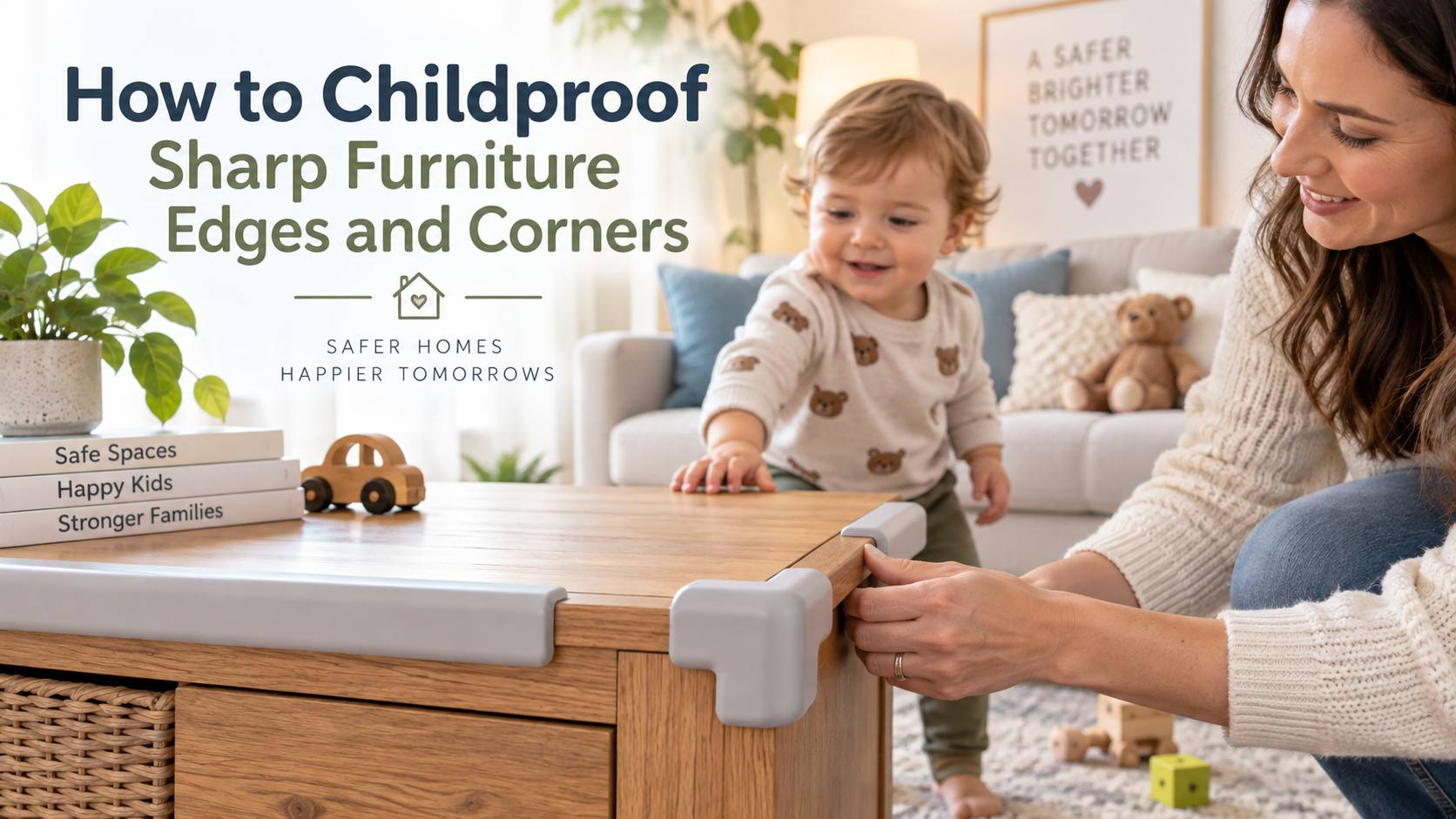
How to Childproof Sharp Furniture Edges and Corners (UK Guide)
The moment a baby starts pulling themselves up and cruising around the furniture, your home looks very different. Suddenly every coffee-table corner, hearth edge and cabinet is at exactly toddler head height — and little ones learning to walk fall over constantly. Sharp furniture edges and corners are one of the most common causes of bumps, cuts and bruises to young children, and cushioning them is one of the quickest, cheapest jobs on any parent’s childproofing list.
This guide shows how to soften those edges and corners with foam tape and edge protection so a wobble ends in a gentle bump rather than a cut lip — plus the bigger furniture hazard you should deal with at the same time.
First, the bigger hazard: anchor tall furniture
Before you cushion a single corner, it’s worth knowing that the most serious furniture risk to a young child isn’t a sharp edge — it’s tip-over. Chests of drawers, bookcases, wardrobes and televisions can topple onto a child who climbs on them, pulls on an open drawer or grabs them for balance, and the results can be severe.
The fix for that is to anchor tall and heavy furniture to the wall using proper furniture anchor straps or brackets, and to secure televisions with a TV strap or a suitable stand. This is genuinely important: anchoring needs a mechanical fixing screwed into the furniture and the wall — adhesive tape is not a substitute and should never be relied on to hold furniture upright. Get the anchoring done, then move on to cushioning the edges and corners, which is where foam tape does an excellent job.
Cushioning sharp edges with foam tape
For straight, sharp edges — the lip of a coffee table, a raised stone hearth, a worktop overhang, a low windowsill or the edge of open shelving — a soft foam tape run along the edge takes the sting out of a knock. A single-sided foam tape is ideal: it’s soft, conforms to the edge, and cushions the impact of a fall. For a softer, more rubbery feel, an EPDM sponge weatherseal foam works well too — it’s the same forgiving foam used to seal doors, and it compresses nicely on impact.
Run the foam along the full length of the sharp edge, keeping it neat, so there’s a continuous soft strip between your child and the hard edge underneath.
Corners are the worst points — protect them well
The corners of tables and units are the sharpest, highest-risk points of all, and they deserve extra attention. Fit soft corner cushions or guards to each one. The challenge with shop-bought corner guards is that their own sticky pads are often weak and peel off within days — which is both useless and, as we’ll cover below, a hazard.
The fix is to bond them properly. Reinforce or replace the guard’s adhesive with a high-grab double-sided foam tape, which grips far more reliably and cushions at the same time, or use a few double-sided foam pads. A well-bonded guard is one that’s still there — and still doing its job — a month later.
Making it stick — and making it removable
Foam and guards only work if they stay put, and furniture surfaces are often dusty, waxed or polished:
- Clean and degrease first. Wipe the edge or corner with an IPA cleaning wipe to remove dust, grease and furniture polish, and let it dry. This is the single biggest factor in whether the tape holds.
- Work in the warm and press firmly. Adhesives bond poorly in the cold, so apply on a mild day and press everything down hard.
- Renting, or worried about marks? Use a removable foam tape or self-adhesive hook & loop so you can lift the protection off cleanly later. Always test on an inconspicuous spot first, especially on wood veneer or painted surfaces.
Where to childproof — the hotspots
Work around the house at your child’s height and cushion the danger points:
- Coffee and side tables — the classic culprit at head height.
- TV units and media stands — sharp corners, and anchor the TV itself.
- Fireplace hearths and surrounds — raised stone or tiled hearths cause nasty knocks; cushion the edge and corners.
- Kitchen worktop corners and islands — especially breakfast-bar overhangs.
- Low windowsills and radiator shelves.
- Open shelving and bookcases — cushion the edges, anchor the unit.
- Desks, dining tables and bed frames — corners and low rails.
- Stair newel posts and any protruding trim.
The honest limits — and a safety warning
It’s important to be realistic about what edge protection does. Cushioning reduces the severity of bumps and cuts — it doesn’t make furniture “safe” or replace watching over a young child. The full picture is anchoring the big items, removing or relocating the worst hazards where you can, and supervision, with edge cushioning as one layer on top.
One safety point specific to foam guards: check them regularly. Determined toddlers pick and peel, and a piece of foam or a guard that comes off can become a choking hazard for a small child. Use a well-bonded tape, inspect the guards often, replace anything loose straight away, and keep any offcuts and peeled pieces well out of reach of babies and toddlers.
How to apply foam edge protection, step by step
- Clean and degrease the edge or corner with an IPA wipe and let it dry.
- Measure and cut the foam tape or guard to length.
- Apply to the edge, pressing firmly along its whole length.
- Deal with the corners — fit a cushioned corner guard, mitre the foam neatly, or reinforce the guard’s fixing with high-grab foam tape.
- Check it holds by giving it a gentle tug, and make a habit of re-checking every guard regularly.
Frequently asked questions
What’s the best way to childproof sharp furniture corners? Fit soft corner cushions to the corners and run a soft foam tape along the sharp edges, making sure both are firmly bonded to a clean, degreased surface. And anchor any tall furniture to the wall — tip-over is the more serious risk.
Does foam tape stay stuck on furniture edges? Yes, provided you prepare the surface — clean and degrease with an IPA wipe, apply in the warm and press firmly. If a shop-bought corner guard’s own pad is weak, reinforce it with a high-grab double-sided foam tape for a far more reliable hold.
How do I childproof a fireplace hearth? Cushion the raised edge and corners of the hearth with soft foam, and consider a padded hearth guard. Never leave a child unsupervised near a fireplace in use, whatever protection is fitted.
Can I childproof furniture without leaving marks if I’m renting? Use a removable foam tape or hook & loop so you can take the protection off cleanly later, and test it on a hidden area first to check it won’t lift veneer or paint.
Is edge cushioning enough to keep my child safe? No — it reduces bumps and cuts but doesn’t replace anchoring tall furniture, removing the worst hazards and supervising your child. Treat it as one layer of protection among several.
Are the foam pieces a choking hazard? They can be if a child peels one off, so use a well-bonded tape, check the guards regularly, replace anything loose immediately, and keep offcuts and any detached pieces away from babies and toddlers.
PSA Solutions are foam tape and adhesive suppliers based in Leicestershire, with soft single-sided foam, high-grab and hook & loop tapes in stock and usually dispatched within 2–3 working days. Not sure which foam suits the job? Contact the team for free advice, and visit the Adhesive Advice Centre for more practical how-to guides.



Add comment