
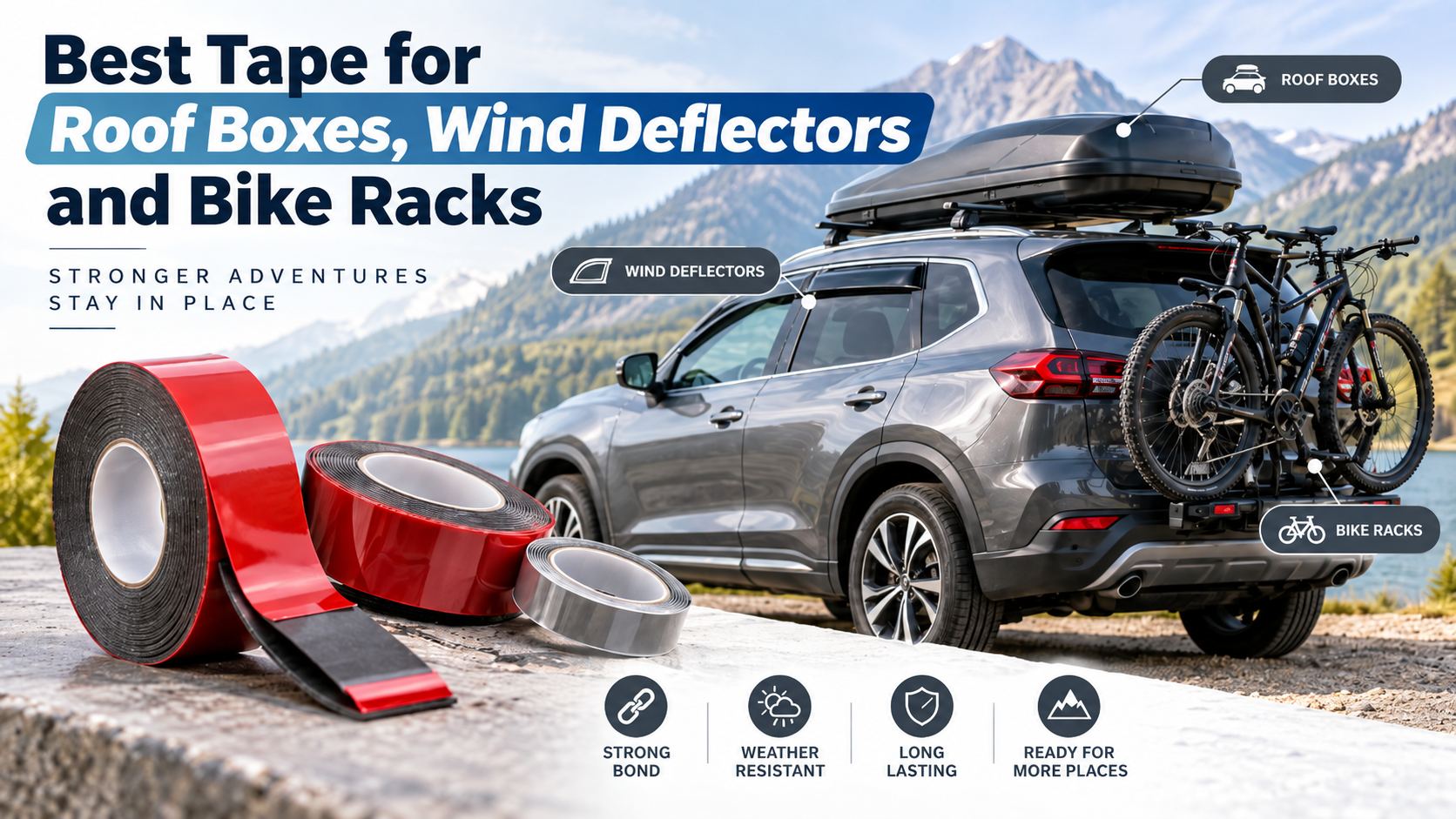
Best Tape for Roof Boxes, Wind Deflectors and Bike Racks
Getting the car ready for a summer road trip — a roof box for the luggage, a wind deflector to cut the noise, a rack for the bikes — and wondering which heavy-duty tape will hold it all in place? There’s an important truth to get straight first, because it keeps your kit, your car and everyone behind you on the motorway safe: tape has a genuine and useful job to do on all three of these, but it is not the same job for each, and for two of the three it isn’t the mounting.
This guide explains exactly what tape can and can’t do for roof boxes, wind deflectors and bike racks — and the best tape for each task.
The most important rule first
Adhesive tape, even the strongest structural acrylic, is brilliant at two things on a vehicle exterior: bonding light fixtures like wind deflectors, and cushioning, protecting and sealing. What it must never do is act as the load-bearing fixing for anything heavy travelling at speed.
A roof box and a bike rack are held on by their own clamps, U-bolts, straps and bolts — never by tape. Tape’s proper roles around them are protecting your paintwork, killing rattles and sealing out the weather. Always follow the manufacturer’s fitting instructions and respect your car’s roof load limit and the rack’s weight rating. With that clear, here’s where the right tape genuinely earns its place.
Wind deflectors: the one job tape actually mounts
Bonnet (bug) deflectors, side-window wind deflectors and the small deflectors on roof boxes are the exception — these are bonded on with tape, and it’s the manufacturer-standard method. The correct product is an automotive-grade structural acrylic foam tape prized for its very high bond strength, weatherproofing, and ability to absorb vibration and cope with big temperature swings.
PSA’s structural acrylic gel tape is made for exactly this kind of high-strength bonding to metal and plastic. The black structural acrylic is ideal where the bond line is hidden and for the low-energy plastics deflectors are usually made from, while the clear gel tape suits a more visible join. The foam core bridges the gentle curve of a bonnet or roof edge and cushions the constant buffeting a deflector takes at speed.
A few caveats even for this job: follow the deflector’s own instructions (some also use clips or screws as well as tape), prep is critical on plastic (see below), let the bond cure fully before you drive, and check it periodically — especially before a long, fast trip.
Roof boxes: tape’s real jobs — and mounting isn’t one of them
To be completely clear: a roof box is mounted by clamping its own feet or U-bolts to your roof bars, exactly as the maker specifies. Tape plays no part in holding it on. But it does three genuinely useful supporting jobs:
- Anti-rattle and paint protection. A little soft foam padding at the contact points — where the box or its clamps meet the roof bars, and where the bars or feet sit against the roof — stops the maddening rattle and protects your paintwork from rubbing. A single-sided foam tape is perfect for this.
- Weather sealing. If your box’s lid seal has perished and it’s letting water in, refresh it with a single-sided EPDM weatherseal foam tape, the same sponge-rubber seal used on doors and windows, so the lid closes watertight again.
- Securing internal fittings. Loose internal trim, foam pads or straps inside the box can be re-secured with an automotive double-sided foam tape.
Bike racks: protect and quieten, don’t hold
The same principle applies to roof-mounted and tow-bar bike racks: they’re secured by their clamps, straps and bolts, and tape never holds the rack or the bikes. Where tape helps is in stopping the damage a rack can do:
- Paint protection. Line the rack’s clamp contact points, cradles and any part of the frame that touches the car with soft foam so metal and plastic don’t rub through your paint. Soft single-sided or EPDM foam does this well.
- Protecting the bikes. Pad the cradles and straps where they grip the bike frames to prevent scuffs and scratches on the bikes themselves.
- Anti-rattle. Cushion the points where straps, buckles and rack arms would otherwise tap against the bodywork on a bumpy road.
Choosing the right tape at a glance
- Bonding a wind or bug deflector: structural acrylic gel tape — black or clear.
- Cushioning, anti-rattle and paint protection (boxes and racks): soft single-sided or EPDM weatherseal foam.
- Weather-sealing a roof box lid: EPDM weatherseal foam.
- Re-securing internal fittings: automotive double-sided foam tape.
How to get a bond that lasts
This matters most for the deflector, where the tape is doing real structural work:
- Work in the warm. Apply in dry conditions at around 10°C or above — acrylic tapes bond poorly in the cold.
- Clean and degrease. Wipe both surfaces with an IPA cleaning wipe to remove wax, polish, dust and grease. This is the single biggest factor in whether the bond holds.
- Prime plastic surfaces. Deflectors are usually a low-energy plastic that a high-bond tape grips far better after a coat of surface primer.
- Round the corners of each tape strip so nothing catches and starts to peel.
- Press hard. These tapes are pressure-activated — the firmer and longer you press, the stronger the bond.
- Let it cure. Give a structural acrylic bond 24–72 hours to reach full strength before driving hard or washing the car, and check the fitting before your first motorway run.
For the foam padding jobs, it’s simpler — clean the surface, apply the foam and you’re done.
A final word on safety
It’s worth repeating, because getting it wrong is dangerous: tape is for bonding light fixtures, cushioning and sealing — not for holding a load at speed. Mount roof boxes and bike racks with their proper hardware, respect your roof and rack load limits, and secure the load itself correctly. An insecure roof load isn’t just a risk to your kit, it’s a hazard to other road users and an offence. Give everything a firm check before you set off, and again at your first fuel stop.
Frequently asked questions
Can you fix a wind deflector with tape? Yes — this is the one job here that tape properly does. An automotive-grade structural acrylic foam tape is the standard method for bonding bonnet, window and roof deflectors. Prep and prime the surface, press firmly, and let it cure before driving.
Can you attach a roof box with tape? No. Roof boxes are mounted mechanically, clamping to your roof bars as the manufacturer specifies. Tape’s only roles are anti-rattle and paint-protection padding at contact points, refreshing the lid’s weather seal, and securing internal fittings.
Can tape hold a bike rack or the bikes? No. Bike racks are held on by their clamps, straps and bolts, and bikes by the rack’s own cradles and straps. Tape is used only to pad contact points so the rack doesn’t scratch the car or the bikes, and to stop rattles.
What’s the best tape for a bonnet or bug deflector? A structural acrylic gel tape designed for automotive use, which gives a high, weatherproof bond and absorbs the vibration a deflector sees at speed. Choose black for a hidden bond line, clear for a visible one.
How do I stop my roof box or bars rattling and marking the paint? Add soft foam padding at the contact points between the box, the bars and the roof, and refresh a perished lid seal with EPDM weatherseal foam. It quietens the rattle and protects your paintwork.
How long before I can drive after bonding a deflector? Press it firmly on application, then allow the structural acrylic bond 24–72 hours to reach full strength before driving hard or washing the car, and always follow the deflector maker’s own guidance.
PSA Solutions are automotive, structural acrylic and foam tape suppliers based in Leicestershire, with the full range in stock and usually dispatched within 2–3 working days. Not sure which tape suits the job? Contact the team for free advice, and visit the Adhesive Advice Centre for more practical how-to guides.



Add comment