
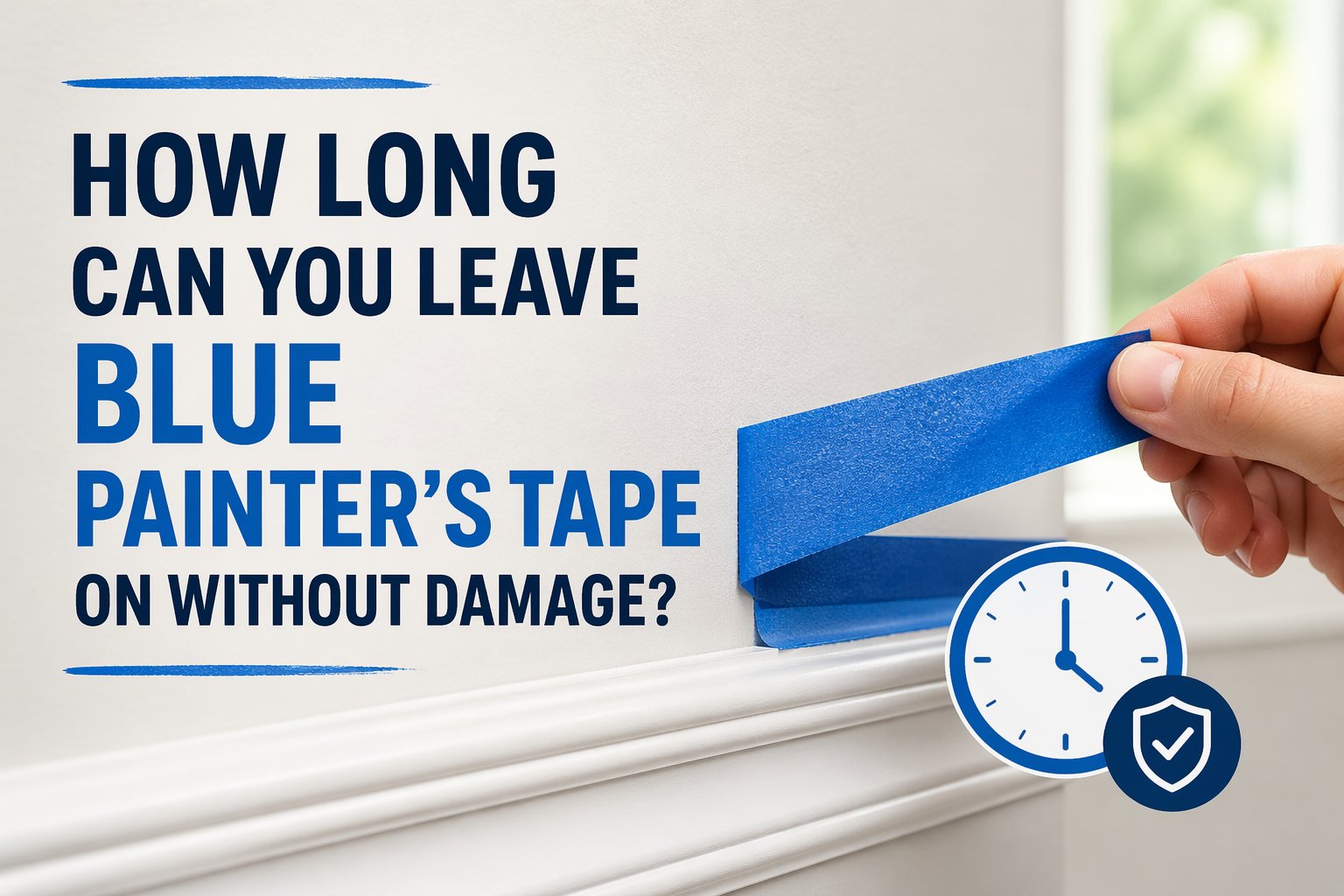
If you’ve ever peeled masking tape off a freshly painted wall only to find chunks of paint coming away with it, you already know the sinking feeling. The culprit is usually one of two things: the wrong type of tape, or the right tape left on for too long.
Blue painter’s tape is specifically engineered to avoid this problem — but it isn’t immune to it. Leave it on long enough, and even the best quality blue tape will eventually cause damage. So how long is safe? And what actually happens if you push past that window?
Here’s everything you need to know.
The Short Answer: 14 Days
For a quality blue painter’s tape, the generally accepted safe removal window is up to 14 days. That’s the figure quoted by most professional decorators’ tape manufacturers, and it’s the guarantee attached to our 14-day blue painter’s tape range.
Within that 14-day window, a properly applied blue tape should:
- Peel away cleanly without tearing
- Leave no adhesive residue behind
- Not lift or damage the surface it was stuck to
Beyond 14 days, all bets are off. The adhesive can begin to cure (essentially bond more permanently to the surface), which is the exact opposite of what you want when it’s time to remove it.
Why Blue Tape Lasts Longer Than Cream Masking Tape
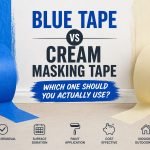
A common question we get is whether you can just use standard cream-coloured masking tape for painting jobs. You can — but you shouldn’t expect the same results.
Standard paper masking tape is typically a general-purpose product with a stronger, more aggressive adhesive. It’s designed for short-term tasks — bundling, labelling, temporary holding — where clean removal isn’t a priority. Leave it on a painted wall for more than 24–48 hours and you’re risking damage.
Blue painter’s tape uses a low-tack adhesive specifically formulated for painted and delicate surfaces. The trade-off is worth understanding:
| Feature | Blue Painter’s Tape | Standard Masking Tape |
|---|---|---|
| Safe removal window | Up to 14 days | 24–48 hours |
| Paint bleed resistance | High | Low to medium |
| Clean peel on paintwork | Yes | Risky |
| Cost per metre | From 1p | From 1p |
Given the price difference is negligible, there’s rarely a good reason to use general-purpose tape for a painting job.
What Affects How Long You Can Leave Tape On?
The 14-day figure assumes reasonable conditions. Several factors can shorten that window significantly:
1. Sunlight and UV exposure. Direct sunlight accelerates adhesive curing. Tape on a south-facing windowsill will bond far more aggressively than tape on an interior hallway wall. For outdoor jobs or sunny rooms, aim to remove tape sooner — ideally within 3–5 days. If the job is outdoor-specific, a UV-resistant acrylic tape (sometimes branded as Sky Mask) is designed for these conditions.
2. Heat. Heat works the same way as UV. A radiator that kicks on behind your taped skirting board, or a summer heatwave, will cure the adhesive faster than you’d expect.
3. Moisture. Condensation, steam, or damp walls can interfere with the adhesive and, in some cases, cause the tape backing to tear when you try to remove it.
4. Surface type. Freshly painted walls (less than 24 hours old), wallpaper, vinyl, and delicate finishes need a lower-tack tape than cured, fully-dried paint. For these surfaces, a delicate surface painter’s tape is a safer choice than standard blue tape.
5. Application pressure. The harder you press the tape down during application, the stronger the bond — and the harder it is to remove cleanly later. Firm, even pressure is good; crushing the tape down with a flat tool repeatedly is overkill for a short job.
What Happens If You Leave Blue Tape On Too Long?
Push past the 14-day window and you’ll typically encounter one or more of these issues:
Adhesive transfer. The sticky residue stays behind when the tape backing comes off. You’ll need to scrub it with a solvent or adhesive remover, which risks damaging the paint underneath anyway.
Paint lifting. The tape bonds to the paint film more strongly than the paint bonds to the wall. When you pull, the paint comes with it — often in jagged strips along the edge of where you masked.
Tearing. The tape backing becomes brittle, especially if exposed to sunlight. Instead of peeling off in a clean strip, it tears into fragments that are time-consuming to remove.
Ghost lines. Even after the tape is gone, a faint outline can remain where the adhesive slightly discoloured the surface.
How to Remove Blue Tape the Right Way
Even within the safe window, there’s a right and wrong way to remove painter’s tape. Three quick rules:
- Remove it while the paint is still slightly tacky, or once fully dry — never during the intermediate “touch-dry but not cured” stage, which is when paint is most likely to lift.
- Pull at a 45-degree angle, slowly and steadily, back on itself. Don’t yank straight up.
- If the paint shows resistance, score along the edge of the tape with a sharp blade first to break the paint film.
The Bottom Line
If you’re using a genuine 14-day blue painter’s tape, you’ve got up to two weeks of flexibility — plenty for almost any domestic decorating job. Just factor in the conditions: heat, sun, and moisture all shorten the window.
For projects that need longer masking times, outdoor use, or delicate surfaces, there are specialist alternatives. If you’re not sure which tape is right for your job, our full decorators’ tape range covers everything from delicate surface tapes to fine line and outdoor UV-resistant options.
Need advice on the right tape for a specific project? Get in touch with our sales team on 0116 286 5141 or email [email protected] — we’re happy to help.

Add comment