
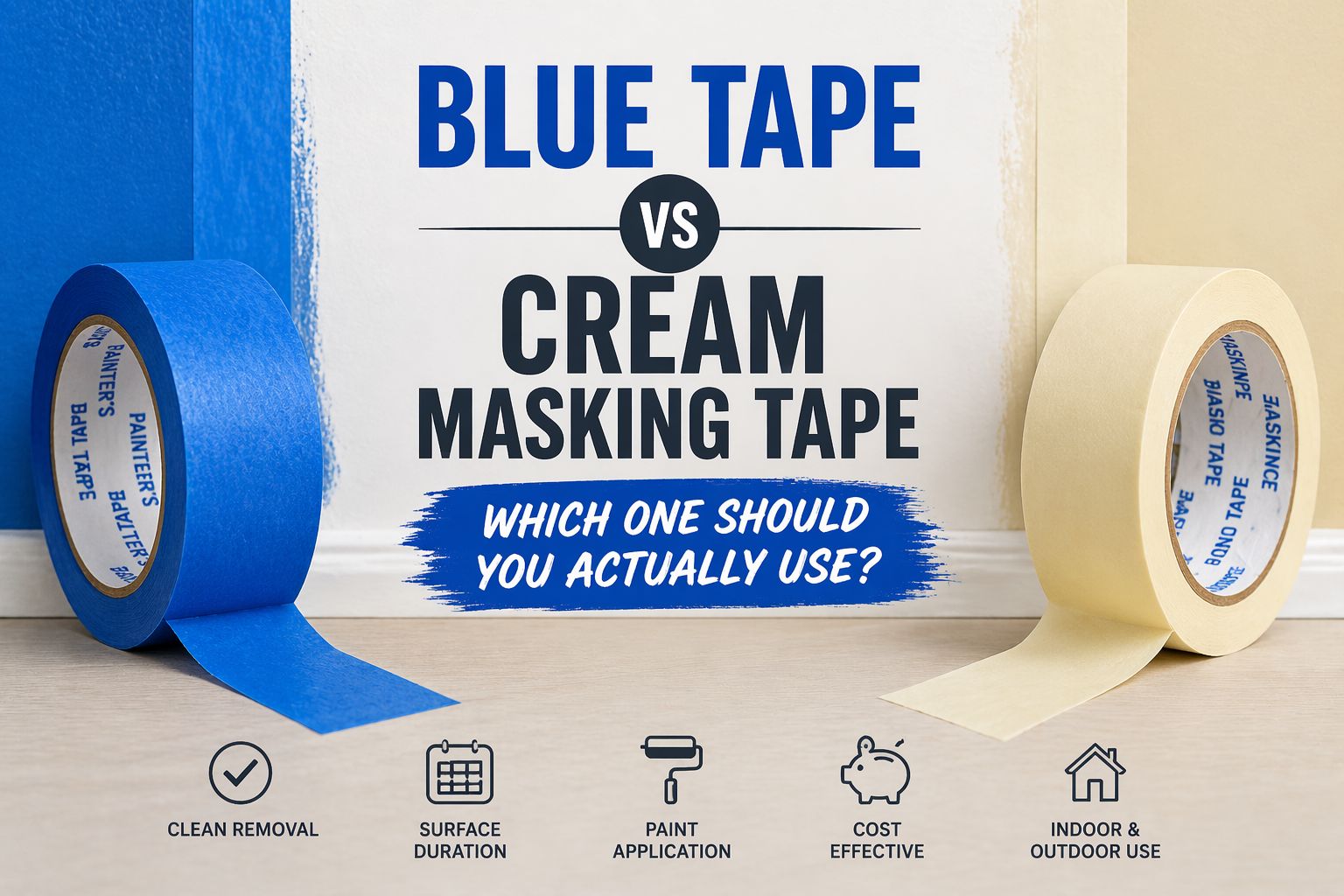
Walk down the adhesives aisle of any DIY shop and you’ll spot them side by side: a roll of cream-coloured masking tape for a couple of quid, and a roll of blue painter’s tape sitting next to it at a similar price. They look almost identical. They’re the same width, similar length, similar sticky paper feel.
So why do decorators insist on the blue stuff — and is it actually worth the swap for a DIY job?
The short answer is yes, almost always. But the reasons are more interesting than “it’s just better.” Here’s what’s actually going on with each tape and when each one is the right choice.
What’s the Actual Difference?
Both tapes are built the same way — a crepe paper backing with a pressure-sensitive adhesive on one side. The difference is in the adhesive formulation and what it’s been optimised for.
Cream (standard) masking tape uses a general-purpose rubber-based adhesive. It’s designed to be cheap, sticky, and versatile. The job it was originally made for is broad and short-term: bundling, labelling, holding things in place, temporary repairs, and yes, some painting. It does all of these reasonably well and none of them brilliantly.
Blue painter’s tape uses a low-tack adhesive specifically engineered for painted surfaces. The backing is often slightly treated to resist paint bleed. It’s a more specialised product that does one thing — masking for paintwork — very well.
The colour isn’t cosmetic either. Blue shows up clearly against most wall colours, so decorators can see exactly where they’ve masked, and it’s easy to spot any bits they’ve missed before the paint goes on.
Head-to-Head Comparison
Here’s how the two stack up across the factors that actually matter on a painting job:
| Feature | Blue Painter’s Tape | Cream Masking Tape |
|---|---|---|
| Adhesive type | Low-tack, acrylic-compatible | General-purpose rubber |
| Safe removal window | Up to 14 days | 24–48 hours |
| Paint bleed resistance | High | Low to medium |
| Works on fresh paint | Yes (with care) | No — will lift paint |
| Leaves residue? | No, if removed in time | Often, especially on warm surfaces |
| Visibility on walls | High (blue contrast) | Low (blends in) |
| Cost per metre | From 1p | From 1p |
| Best for | Painting, decorating | Bundling, labelling, short-term holds |
The cost line is the one most DIYers don’t realise. Both tapes start at around 1p per metre when you buy them in reasonable quantities — there’s no meaningful price difference for the vast majority of jobs. The idea that blue tape is a “premium upgrade” you pay extra for is largely a myth.
When Cream Masking Tape Is Actually the Right Choice
Cream masking tape isn’t bad — it’s just not specifically designed for painting. It earns its place for:
- Bundling cables, packaging, or lightweight items where you need short-term grip.
- Labelling tools, boxes, or storage — the beige colour takes a marker pen well.
- Craft projects and classroom use where clean removal from paintwork isn’t a concern.
- Temporary holding during DIY jobs — clamping a join while glue sets, holding a template in place, etc.
- Automotive and high-heat applications, where specialist low bake or high-temperature masking tapes are used in body shops for spray painting.
For any of those, reaching for a standard masking tape is perfectly sensible.
When Blue Tape Is Worth the Swap (Which Is Most of the Time)
If you’re painting anything — walls, skirting, doors, trim, window frames, ceilings — blue tape should be your default. Here’s why:
Paint bleed. This is the single biggest advantage. Standard masking tape has gaps along the edge that paint seeps under, leaving those fuzzy, wavy lines that scream “DIY job.” Blue painter’s tape is designed to seal tightly against the surface for sharp, clean edges.
Clean removal. A good-quality blue tape can stay on the wall for up to 14 days and still peel away cleanly. Cream tape, left on for more than 24–48 hours — especially on a warm or sunny wall — will start to bond to the paint underneath. Pull it off and you risk taking chunks of paint with it.
Freshly painted surfaces. If you’re doing a second coat or masking over paintwork that’s less than a couple of weeks old, cream tape will lift it. Blue tape (especially the low-tack variety) is formulated for exactly this scenario.
Visibility. On a white or pale wall, cream tape almost disappears. That sounds trivial until you’re trying to check your work before painting and miss a gap.
For the full breakdown of how long blue tape actually stays safe on a surface, we’ve covered that in detail in our guide on how long you can leave blue painter’s tape on without damage.
What About Specialist Alternatives?
Blue tape isn’t the only painter’s tape worth knowing about. If your job has specific demands, there are better options:
- Delicate surface tapes — for freshly painted walls (less than 24 hours old), wallpaper, vinyl, and veneer. These are even lower tack than standard blue tape.
- Fine line masking tapes — for precision work like two-tone walls, stripes, or sharp curves. Thinner and more flexible than standard blue tape.
- Outdoor UV-resistant tapes (sometimes branded Sky Mask) — for exterior jobs exposed to sunlight and weather, where standard blue tape would cure too quickly.
- Film drop tapes — combined masking tape and plastic sheeting, for covering large areas like floors or furniture in one step.
You’ll find all of these across our full decorators’ tape range.
The Verdict
If you’re masking for paint, use blue tape. The performance difference is significant, and at roughly the same price as standard masking tape, there’s no good reason not to.
If you’re bundling, labelling, or holding something short-term, standard cream masking tape is perfectly fine and often preferred.
The one real mistake is using cream masking tape on a painting job to “save money” — because you won’t. You’ll either spend longer cutting in around messy edges, touching up paint that got under the tape, or repainting sections where the tape lifted your finish. That’s a lot of aggravation to save pennies.
Need help choosing the right tape for a specific project? Our sales team is happy to advise — call 0116 286 5141 or email [email protected].

Add comment