
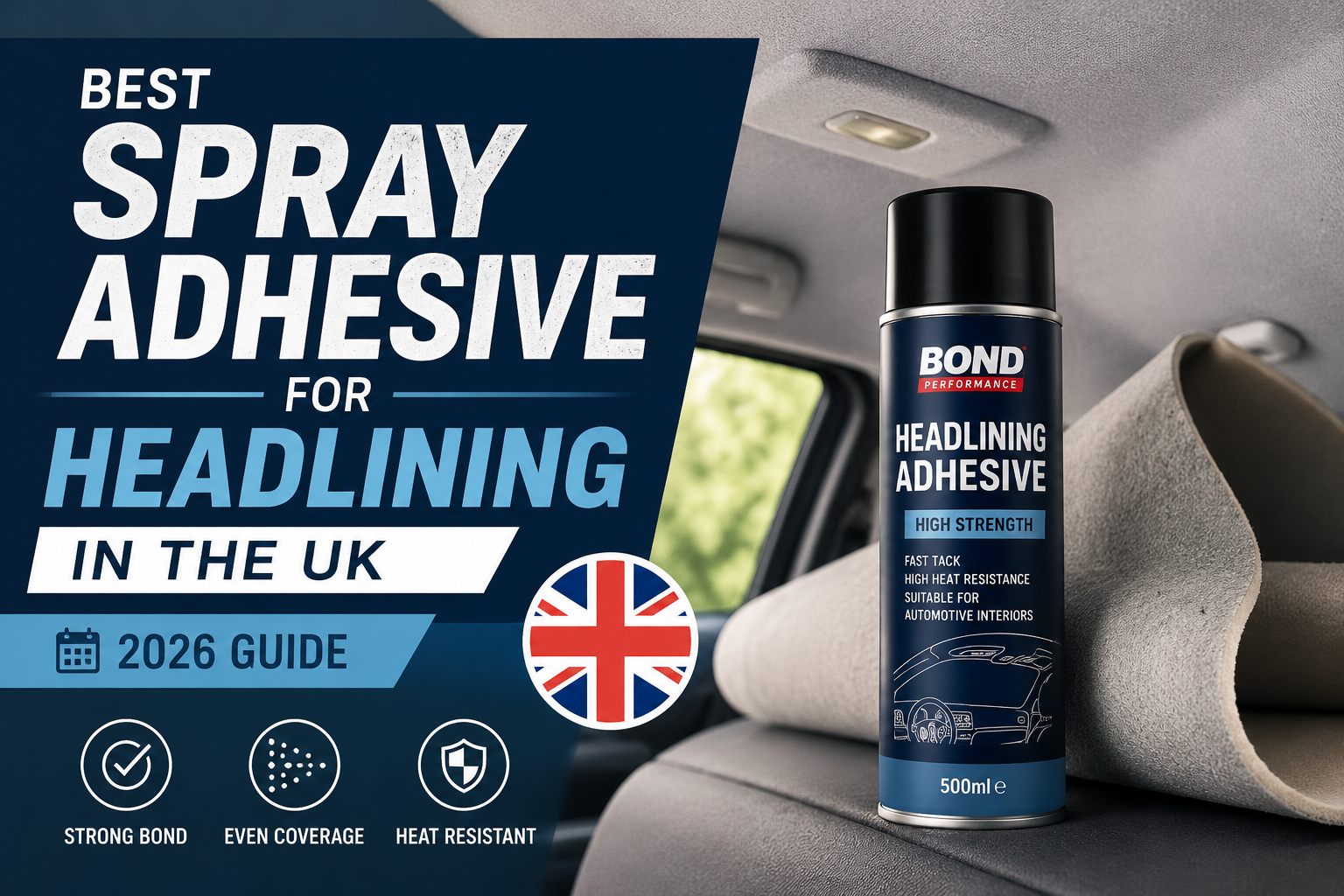
Best Spray Adhesive for Headlining in the UK (2026 Guide)
If your car roof lining is sagging, bubbling, or starting to peel away, choosing the correct adhesive is one of the most important parts of the repair. Whether you are restoring a classic car, repairing a daily driver, fitting out a campervan, or lining a commercial van, using the wrong glue can quickly lead to failure — especially during warmer weather.
Vehicle interiors regularly experience:
- extreme heat
- vibration
- moisture
- condensation
- UV exposure
- constant movement
Because of this, standard DIY glues and low-cost aerosol sprays often fail after only a few months.
Professional automotive-grade spray adhesives are specifically designed to provide strong, long-lasting bonds for foam-backed fabrics, carpets, insulation materials, and upholstery surfaces commonly used in automotive interiors.
For most automotive and campervan projects, professional spray adhesives provide the best combination of:
- heat resistance
- fast application
- strong tack
- flexibility
- even coverage
- durability
Why Headlining Adhesive Matters
A vehicle roof lining is constantly under stress. During summer months, temperatures inside vehicles can exceed 60°C, particularly in:
- campervans
- caravans
- black vehicles
- vans with large roof areas
This heat softens weaker adhesives and causes the fabric to separate from the backing board.
This is why professional installers and upholsterers typically use high-temperature automotive spray adhesives rather than standard household glue.
The best headlining adhesives are designed to:
- withstand high temperatures
- remain flexible
- resist vibration
- bond foam-backed materials
- provide long-term durability
Common Causes of Headliner Failure
1. Using Cheap DIY Spray Glue
One of the most common mistakes is using general-purpose aerosol adhesive bought from a DIY store.
These products are usually not designed for:
- automotive temperatures
- foam-backed fabric
- flexible interiors
- overhead applications
Professional-grade upholstery spray adhesives are formulated specifically for these demanding conditions.
2. Poor Surface Preparation
Even the best adhesive will fail if applied over:
- old glue residue
- dust
- loose foam
- grease
- contaminated surfaces
Before applying adhesive:
- remove all old foam
- clean thoroughly
- sand rough areas lightly if needed
3. Applying Too Much Adhesive
Oversaturating the material can:
- damage foam backing
- cause bleed-through
- create uneven bonding
- increase drying times
Professional contact spray adhesives are designed to provide strong bonding with controlled application.
4. Incorrect Installation Temperature
Cold conditions reduce tack performance and may prevent proper curing.
For best results:
- apply indoors where possible
- avoid excessive humidity
- follow product temperature guidelines
Spray Adhesive vs Contact Adhesive for Headlining
Comparison Table
| Feature | Spray Adhesive | Contact Adhesive |
|---|---|---|
| Ease of Application | Excellent | Moderate |
| Large Surface Coverage | Excellent | Good |
| Heat Resistance | Excellent | Good |
| Foam Compatibility | Excellent | Depends on formulation |
| Professional Finish | Excellent | Moderate |
| Application Speed | Fast | Slower |
| Overspray Risk | Moderate | Low |
| Best for Campervans | Excellent | Good |
| Best for Vehicle Roof Linings | Excellent | Good |
Why Spray Adhesive Is Usually Best for Headlining
Professional spray adhesives are the preferred option for most automotive upholstery professionals because they allow for:
- quicker installation
- smoother finishes
- even adhesive distribution
- better coverage on large panels
They are especially useful for:
- vehicle roof linings
- campervan carpet lining
- boot carpeting
- acoustic foam
- van conversions
- caravan interiors
Many professional installers also use heavy-duty foam spray adhesives when working with foam-backed headliner materials and upholstery projects.
What to Look for in a Professional Headlining Adhesive
High Temperature Resistance
This is arguably the most important feature.
Cheap adhesives often soften in heat, causing the fabric to sag after a few months.
High-quality automotive adhesives are designed specifically for:
- hot vehicle interiors
- overhead surfaces
- long-term performance
Strong Initial Tack
Strong initial grab helps hold fabric in position immediately during installation.
This is particularly important for:
- curved roof sections
- vertical panels
- overhead work
Flexible Bonding
Vehicle interiors constantly flex and vibrate during driving.
A rigid adhesive may eventually crack or separate.
Professional automotive trim adhesives are designed to remain flexible over time.
Foam Compatibility
Many headlining fabrics contain foam backing which can be damaged by aggressive solvents.
Using the correct foam-safe spray adhesive helps prevent:
- foam deterioration
- bleed-through
- weak bonding
Best Adhesive for Campervan Headlining
Campervans create even greater demands on adhesives because they experience:
- condensation
- temperature swings
- prolonged heat exposure
- constant vibration
This is why many professional van converters rely on industrial spray contact adhesives designed for vehicle interiors.
These adhesives are commonly used for:
- carpet lining
- insulated panels
- roof linings
- acoustic materials
- upholstery work
How to Apply Headlining Adhesive Properly
Step 1: Remove the Existing Headliner
Carefully remove:
- old fabric
- foam residue
- degraded adhesive
Take care not to damage the backing board.
Step 2: Prepare the Surface
Clean thoroughly using:
- brushes
- compressed air
- panel wipe
- adhesive remover
A clean surface dramatically improves bonding performance.
Step 3: Apply Adhesive Evenly
Apply adhesive consistently across the surface.
Avoid:
- heavy wet patches
- uneven coverage
- overspray buildup
Professional spray systems provide much more even coverage than low-cost aerosol cans.
Step 4: Allow Proper Flash-Off Time
Most professional adhesives require a short tack-off period before bonding.
Always follow the manufacturer’s instructions.
Step 5: Apply the Fabric Carefully
Start from the centre and work outward gradually.
Use:
- rollers
- spreaders
- soft pressure
to minimise:
- wrinkles
- bubbles
- trapped air
Common Mistakes to Avoid
Using Household Glue
DIY spray glue is rarely suitable for automotive interiors.
Always choose a proper automotive or upholstery adhesive.
Skipping Surface Preparation
This is one of the biggest causes of headliner failure.
Applying Adhesive Too Thickly
Excess adhesive may:
- soak through fabric
- weaken the bond
- extend cure times
Ignoring Heat Resistance
Vehicle interiors get far hotter than most people expect.
Always choose high-temperature adhesives designed for automotive use.
Frequently Asked Questions
What is the best spray adhesive for headlining?
Professional high-temperature automotive spray adhesives are generally the best option because they provide strong bonding and heat resistance.
Can I use normal spray glue for headlining?
Most DIY spray glues are not designed for vehicle interiors and may fail in high temperatures.
Why does car roof lining sag?
Over time, the foam backing deteriorates and weaker adhesives soften in heat, causing the fabric to separate.
Is spray adhesive better than contact adhesive for headliners?
For most applications, spray adhesive provides faster application and more even coverage across large surfaces.
What temperature can automotive spray adhesive withstand?
Professional automotive adhesives are specifically formulated for high-temperature vehicle interiors.
Can spray adhesive be used for campervan lining?
Yes, professional automotive spray adhesives are widely used for campervan carpet lining and insulation work.
How long does headlining adhesive last?
A professional automotive adhesive can last many years when applied correctly.
Do I need to apply adhesive to both surfaces?
This depends on the adhesive system being used. Always follow the manufacturer’s instructions.
Final Thoughts
Choosing the best spray adhesive for headlining is essential for achieving a professional, long-lasting finish in:
- cars
- campervans
- caravans
- vans
- commercial vehicles
The right adhesive helps prevent:
- sagging
- bubbling
- lifting
- heat failure
- costly rework
Professional-grade spray contact adhesives provide:
- stronger bonding
- improved heat resistance
- faster application
- cleaner finishes
- better long-term durability
Whether you are a professional installer, upholsterer, campervan converter, or DIY enthusiast, investing in the correct adhesive system will dramatically improve both the appearance and lifespan of your finished project.

Add comment