
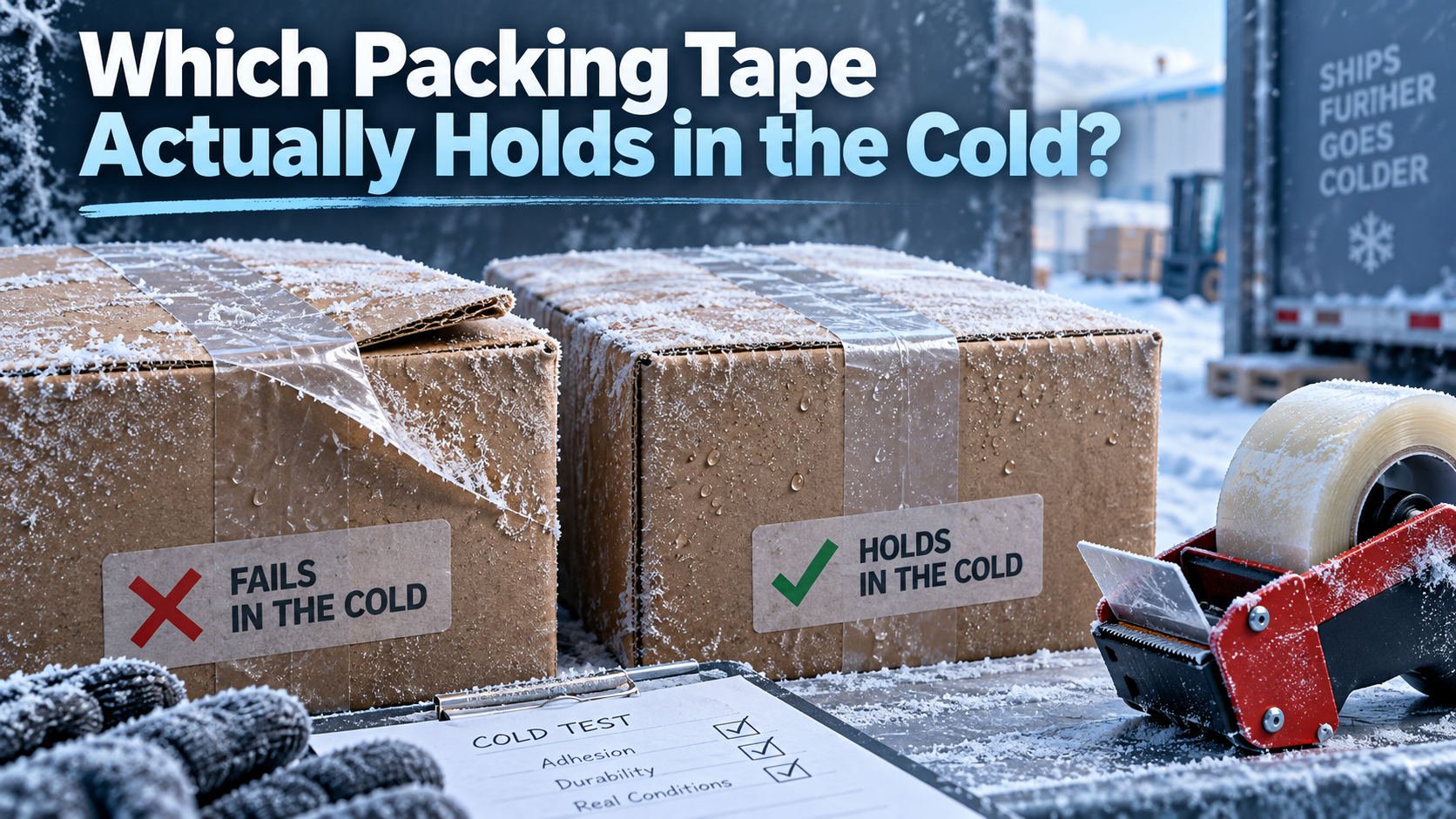
Which Packing Tape Actually Holds in the Cold?
Every warehouse manager and online seller knows the pattern. Boxes that taped up perfectly all summer start letting go the moment the weather turns — tape peeling back off the cardboard, ends lifting, and the occasional parcel bursting open in transit or sitting in a cold store with its flaps gaping. It always seems to happen just as the Q4 rush and the cold months arrive together.
The culprit is almost never the box, and rarely the person taping it. It’s the tape — and specifically its adhesive. Not all packing tape is built to hold in the cold, and picking the right one (and applying it properly) is the difference between a secure seal and a pile of returns. Here’s what actually works when the temperature drops.
Why packing tape fails in the cold
As the temperature falls, the adhesive on a roll of parcel tape stiffens and loses its grab. A tape that feels aggressively sticky in a warm office can turn hard and glassy in a cold warehouse, and instead of flowing into the surface of the cardboard and gripping, it just sits on top. The ends lift first, then the whole seal peels and the box pops.
Three things make it worse:
- Cold cardboard. A cold, stiff box surface is far harder to bond to than a warm one.
- Condensation. Boxes moved between a warm packing area and a cold store (or a cold lorry) sweat with condensation, and no tape sticks to a damp surface.
- Dust and recycled board. Dusty or fibrous recycled cardboard gives the adhesive less to grip, and the colder it is, the less forgiving the tape.
It’s the adhesive, not the tape, that decides
This is the key thing to understand: the backing (polypropylene, vinyl, paper) matters far less than the adhesive on it. There are three common types, and they behave very differently in the cold:
- Hot-melt (synthetic rubber) adhesive is the aggressive, quick-grab adhesive on standard polypropylene parcel tape. It’s excellent and inexpensive at room temperature — but its performance drops off as it gets cold, which is exactly why summer-reliable tape fails in winter.
- Natural rubber adhesive, used on paper and gummed grades, typically needs a surface temperature of around 10°C or more to bond at all. It’s not a cold-weather option.
- Acrylic adhesive is the cold performer. It keeps bonding at low temperatures — down to around −5°C — and it’s also resistant to UV, ageing and mould, which makes it the right choice for cold stores, refrigerated and cold-chain work, unheated warehouses, winter transit and long-term storage.
So if boxes are being sealed, stored or shipped in the cold, the answer is an acrylic-adhesive tape.
The best packing tape for the cold
For cold environments, reach for an acrylic-based carton tape. PSA’s vinyl carton sealing tape is the one to know: it’s acrylic-based, specifically cold-weather and mould resistant, and rated across a 0–70°C range. It’s a premium vinyl tape that runs quietly through a dispenser, conforms well, and bonds reliably even to fibrous recycled board — all the things you want when it’s cold and the cartons aren’t perfect. Browse the full vinyl carton tape range for widths.
When standard polypropylene is perfectly fine
There’s no need to over-spec. If you’re sealing and despatching boxes at room temperature for quick delivery, a standard hot-melt polypropylene carton tape is strong, fast and the most economical choice — it only falls short when things get cold or need to survive long cold storage. Keep the cheaper polypropylene for warm, fast-turnaround packing and switch to acrylic vinyl for the cold and for anything going into storage. The full packing tape range covers both.
For heavy boxes — and brittle, cold cardboard
Cold doesn’t just affect the tape; it makes cardboard more brittle, so heavy cartons are more likely to fail at the seams in winter. For heavy or valuable boxes, reinforce the seal with a glass-filament strapping tape and use the H-taping method — a strip along the centre seam and one across each end seam, so the box is held closed on every edge that takes the strain. It’s a small amount of extra tape for a big gain in security.
Application is half the battle
Even the best cold-rated tape fails if it’s applied badly, and this is where most winter seal failures actually come from:
- Seal warm where you can. Tape and boxes bond far better at room temperature, even if the parcel then goes out into the cold. Keep your tape rolls and flat boxes somewhere warm before packing rather than letting them chill on a cold loading bay.
- Make sure the surface is dry and clean. Wipe away dust, and let cold boxes that have come in from a cold store acclimatise and dry off first — condensation is a seal-killer. For a greasy or contaminated surface, an IPA wipe helps.
- Press it down firmly. All these tapes are pressure-sensitive, so the bond is made by the pressure you apply. Run a hand or a dispenser’s roller firmly along the whole length, and pay extra attention to the ends, where lifting starts.
- Use enough, and overlap. Carry the tape at least 50mm down each side of the box, and H-tape or add extra wraps on heavy or cold cartons.
- Use a dispenser. It gives a cleaner, firmer, more consistent application than tearing tape by hand — which matters most when the adhesive is working hard in the cold.
- Don’t overfill boxes. A bulging box puts the seal under constant strain before it ever leaves the building.
Quick recommendations
- Cold stores, refrigerated, cold-chain and winter transit: acrylic vinyl carton sealing tape.
- Long-term storage (cold or damp): acrylic vinyl tape, for its mould and ageing resistance.
- Warm, room-temperature despatch: standard hot-melt polypropylene carton tape.
- Heavy or brittle cold boxes: reinforced glass-filament strapping tape, applied H-tape style.
Frequently asked questions
Why does my packing tape keep coming off in the cold? Because a standard hot-melt (rubber) adhesive loses its tack as the temperature drops, and because cold, dusty or damp cardboard is hard to bond to. Switch to an acrylic-adhesive tape and, wherever possible, seal the boxes while they and the tape are still at room temperature.
What packing tape works in a cold warehouse or freezer? An acrylic-adhesive carton tape, such as a cold-weather vinyl carton sealing tape. Acrylic adhesives keep bonding at low temperatures where rubber and hot-melt adhesives fail.
Can you apply packing tape in the cold? You can, but the bond is far better if the tape and the box are at room temperature when you seal them — the parcel can then go out into the cold. Avoid taping over condensation or damp, cold board.
Is vinyl or polypropylene packing tape better? It depends on the job. Acrylic vinyl tape is better for cold conditions, long-term storage and quiet dispensing; hot-melt polypropylene is a strong, cheaper choice for warm, fast room-temperature despatch.
Does the box surface really matter? Yes — dust, damp and condensation all stop tape bonding, and recycled fibrous board needs a tape that grips and conforms well. Clean, dry, warm board gives the best seal every time.
How do I stop boxes bursting in transit? Use the right tape for the temperature, apply it warm and press it down firmly, H-tape the seams, reinforce heavy boxes with filament strapping tape, and don’t overfill the carton.
PSA Solutions are carton and packing tape suppliers based in Leicestershire, with polypropylene, vinyl and reinforced tapes in stock and usually dispatched within 2–3 working days. Packing for a cold store or shipping through the winter? Contact the team for free advice on the right tape, and visit the Adhesive Advice Centre for more practical guides.


Add comment